

The Minimum Wage Board Chairman Syed Azad Subhani said on Tuesday that whatever the final figure for the ready-made garment (RMG) sector minimum wage turns out to be, it will be made effective from 1 December 2026. Workers will therefore receive the increased rate in their January salary. However, he made clear that the board cannot announce the new wage on any fixed date such as 1 December because of legal procedures.
The statement came at an emergency press conference at the Wage Board office in Dhaka, held to address the confusion created by the postponement of the board’s third meeting and the continuing unrest among garment workers.
Syed Azad Subhani said: “I never promised that the new wage would be announced on 1 December. That is not legally or practically possible. Whenever we finalise it, the gazette notification will state that the increased wage is payable from 1 December 2026.”
Under the law the board has six months to decide the new wage and can seek more time from the government if needed. The chairman insisted both the government and the board want the earliest possible resolution. The board has so far held two meetings. The third meeting, scheduled for Monday, was postponed after a permanent member (the workers’ representative) fell ill. A new date of 23 November has been fixed. The chairman denied any pressure, request or threat from any side and said the owners’ side would present its proposal only on the day of the third meeting.
He added that a draft proposal cannot be published in November because proposals from both owners and workers must first be received and then negotiated. Any decision that is simply imposed, or that bypasses legal procedures, risks being struck down later. Board members have been visiting factories in Chattogram, Narayanganj and Savar to collect real data on wages, living costs and family dependency.
Delay amid bloodshed and mass cases
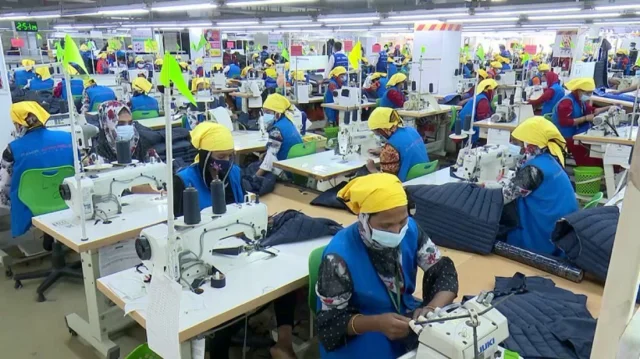
While the board continues its procedural work, workers have been on the streets for weeks demanding the minimum monthly wage be raised from the current Tk 12,500 to Tk 30,000. The government’s slow pace has coincided with a harsh crackdown.
Police have repeatedly used tear gas, sound grenades and batons against protesting workers in Gazipur, Ashulia, Savar, Mirpur and Narayanganj. Factories have been forced to shut, highways blocked, and hundreds of workers injured. At least two workers have been killed in the unrest:
- Toufiq Hossain (also reported as Toufiq Sheikh), a worker at Laila Styles Limited in Gazipur, died on 3 November after being severely beaten while recording or present at a protest on 2 November. Rights groups and some reports allege the attack was carried out by leaders and activists of the ruling BNP.
- Selim Islam, a junior operator at Trent Shoes in Ashulia, died on 16 November after being critically injured (reportedly struck with an iron rod) in an attack by outsiders on 4 November during wage-related tensions. Five people have been arrested in connection with the case.
In addition, police have filed wholesale criminal cases naming thousands of mostly unidentified persons. Reports indicate at least 18 cases involving around 19,500 accused across Mirpur, Gazipur, Ashulia and Narayanganj, many under the Anti-Terrorism Act. Hundreds of workers and several labour leaders have been arrested.
Workers and rights groups describe the combination of physical force, mass FIRs and threats of “no work, no pay” as an attempt to crush the legitimate demand for a living wage rather than resolve it quickly through the Wage Board.
The chairman’s assurance that the eventual wage will be backdated to 1 December offers some formal protection, but does nothing to stop the ongoing violence, the deaths of workers, or the criminal cases hanging over thousands of them while the board continues its slow, procedure-bound process.