


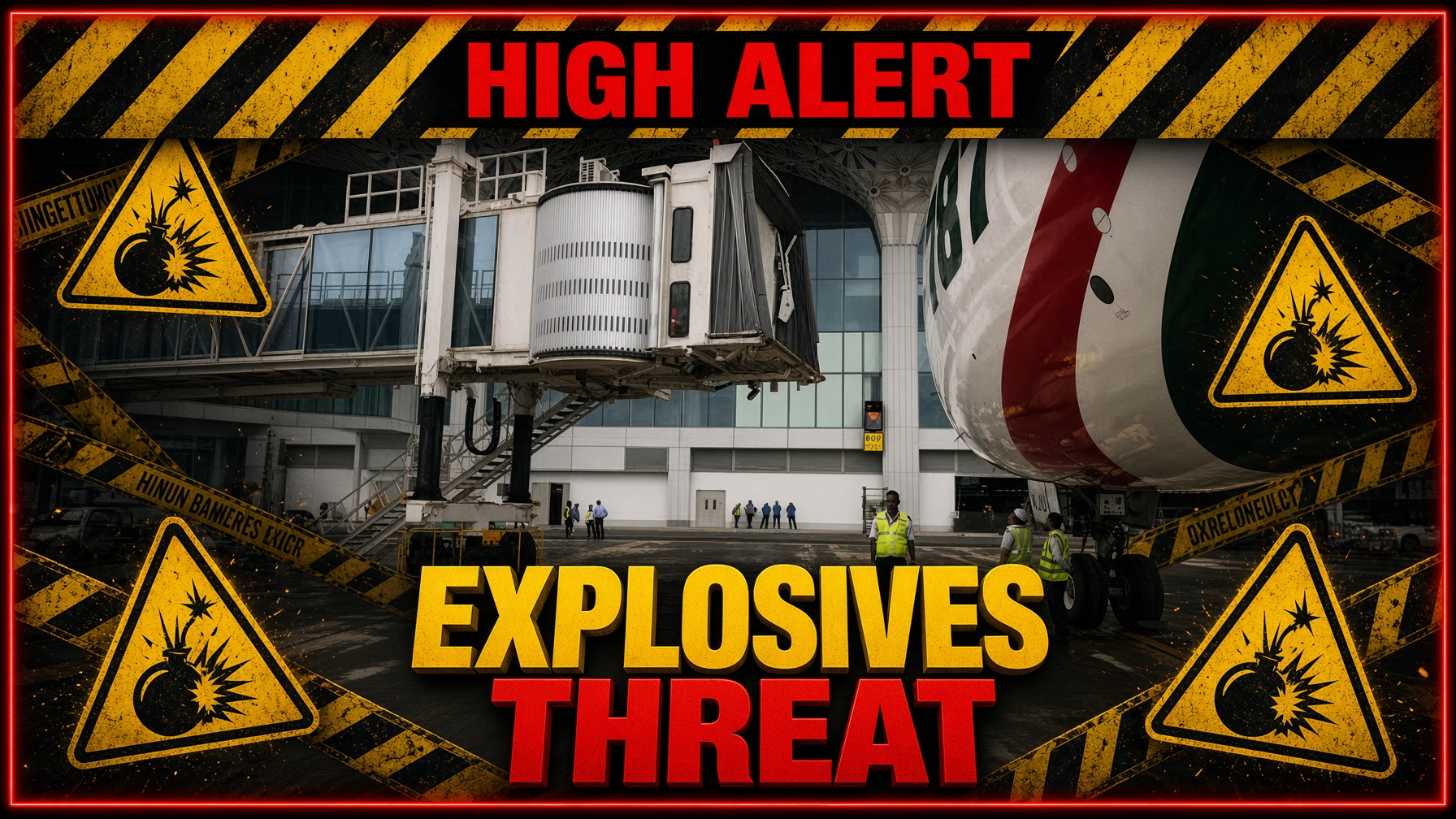
Two abandoned grenades were recovered on 10 November near the main gate of Hazrat Shah Makhdum Airport in Rajshahi, triggering panic and prompting the Civil Aviation Authority of Bangladesh (CAAB) to order heightened security at all airports nationwide.
A pedestrian spotted the two grenades beside a flower plant to the left of the airport gate around 11:00 am on Tuesday and alerted Assistant Sub-Inspector (ASI) Palash of the Baya Police Outpost under Airport Police Station. Palash immediately informed the Officer-in-Charge (OC).
Airport authorities and members of the Armed Police Battalion (APBn) responsible for gate security closed the main entrance as a precaution. Passengers were redirected through the mosque gate, causing alarm among those arriving at the airport.
Police said three armed APBN personnel were on round-the-clock duty at the gate, yet it was unclear when or by whom the grenades had been placed. The devices were moved from the airport area to an open field in Pakuria under Paba upazila, where a bomb disposal unit safely defused them after taking necessary precautions.
The incident follows a series of cocktail explosions near Hazrat Shahjalal International Airport in Dhaka. Miscreants threw two cocktails from a flyover, with no casualties reported, according to Airport Police Station OC Kamrul Hasan Talukdar. Six more cocktails exploded at four other locations in the capital.
Amid ongoing unrest — including garment workers’ protests and sabotage involving cocktail blasts and bus arsons — CAAB headquarters has directed Shahjalal and all other airports across the country to strengthen security. Officials have been instructed to maintain 100 percent vigilance, conduct 24-hour patrols, and keep airports and their surroundings under strict surveillance so that no sabotage targets these key installations.
Air Commodore Asif Iqbal, CAAB Member (Security), told Bangla Tribune that both the cocktail blasts near Shahjalal and the grenades found outside Shah Makhdum Airport were being taken seriously. After the Shahjalal incidents, a meeting was held and APBN and airport police were asked to intensify surveillance in the outer areas. Twenty-four-hour monitoring has been in place since then.
He noted that the Rajshahi grenades were found outside the airport perimeter, not inside the facility itself, but police patrols have still been increased. “We have routine security measures that remain strict at all times. When the situation deteriorates, we further enhance security because airports are key point installations. Our crisis response teams are always on standby,” he said.
Asif Iqbal added that there is no reason for concern over airport security, as the incidents occurred outside the airport boundaries. He mentioned that a recent ICAO security audit had been completed and is expected to improve Bangladesh’s international security rating. Currently, all airports and their surrounding areas remain under 24-hour surveillance.
Aviation experts have stressed that airports, as critical infrastructure, must be protected at all costs. Even attacks in the vicinity can be reported internationally as airport-related incidents, potentially damaging the country’s image and leading to higher risk assessments.
Aviation expert ATM Nazrul Islam said the incidents, though outside the airport area, still have an impact. “To protect the image, security must be ensured both inside and outside the airport,” he told Bangla Tribune.
Another aviation expert, Kazi Wadeul Alam, said CAAB should take every possible measure to ensure that no negative message about airport security reaches the international community.