


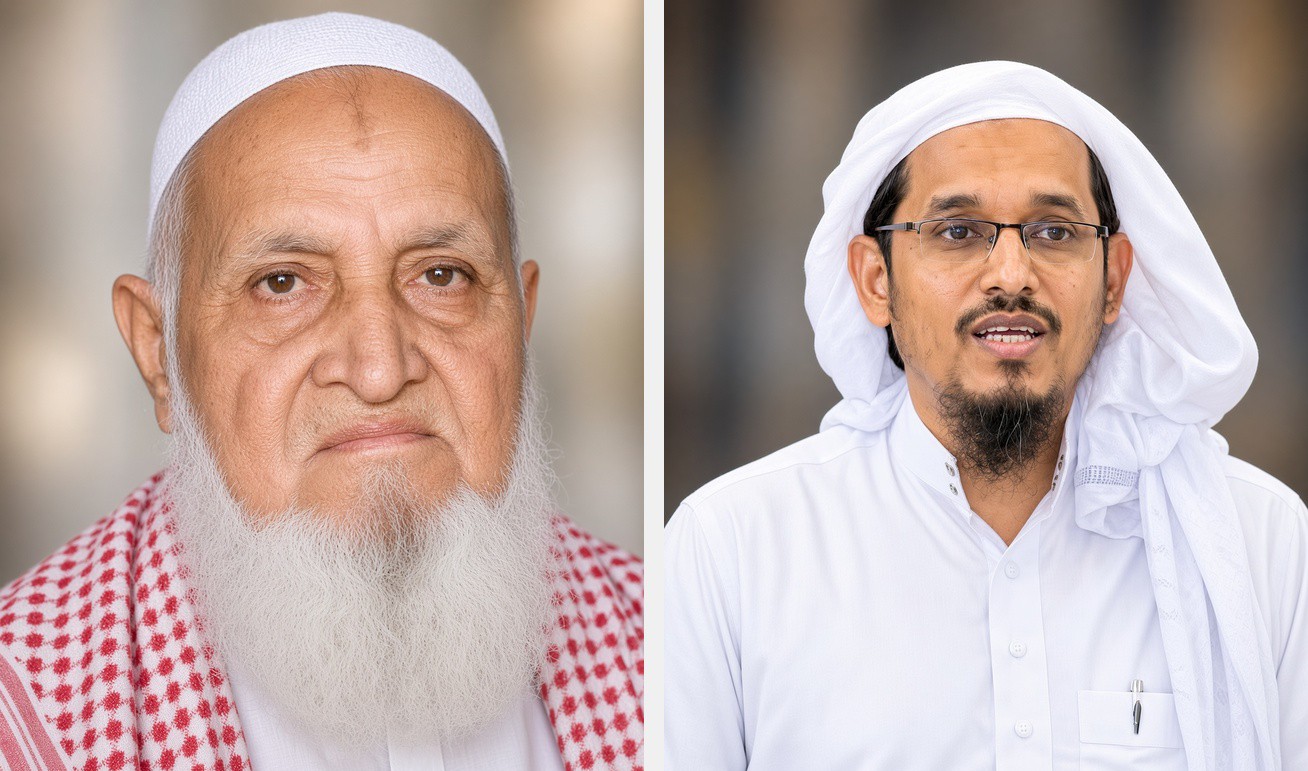
Radical Islamist group Hefazat-e-Islam Bangladesh has strongly opposed the construction of a permanent, roughly 30-foot-high Saraswati statue at Jagannath Hall of Dhaka University, calling it part of a “Hindutva blueprint” and a hegemonic conspiracy.
In a statement, Hefazat Amir Allama Muhibbullah Babunagari and General Secretary Allama Sajedur Rahman linked the project to earlier attempts to build a large Ram statue in Palashbari, Rangpur. They described the choice of a strategically important location as part of an “expansionist design” and urged the government to investigate.
The statement further claimed that forces defeated in the 2024 political transition are using the Hindu community as a “Trojan horse” to expand “Hindutva soft power” in Bangladesh. It argued that Jagannath Hall is not reserved exclusively for Hindu students but is also designated for Buddhist, Christian and indigenous students, so one community cannot treat it as its private property.
The organisation also accused secular-progressives of hypocrisy for remaining silent on the statue while objecting to Muslim cultural or religious practices on campus. Joint Secretary Mufti Harun Izhar separately stated that statues belong in temples, not universities, and named journalist Santosh Sharma as a provocateur.
These sweeping claims have raised concern because they frame a university hall’s long-standing student demand for a permanent Saraswati idol—linked to an annual festival already held at the hall—as a coordinated plot involving the entire Hindu community and India. University authorities say Vice-Chancellor Professor ABM Obaidul Islam laid the foundation stone. At the ceremony he emphasised that Bangladesh belongs to people of all faiths and that the country should be free of communal conflict. Hall Provost Professor Debashish Pal has said the concrete statue, once completed, would be the world’s largest permanent Saraswati idol and that the university plans to apply for Guinness World Records recognition. The design is by Shapan Pal, a former student of the Faculty of Fine Arts.
The timing of the statement is noteworthy. Hefazat-e-Islam has recently formed a seven-party alliance and is supporting the BNP-led government. BNP ministers have been holding meetings with Hefazat leadership, and Mufti Harun Izhar himself has met Prime Minister Tarique Rahman. Against this backdrop of growing political proximity, the organisation’s decision to issue a strongly worded communal framing of a minority cultural project has drawn particular attention.
Jagannath Hall has traditionally hosted large-scale Saraswati Puja celebrations. The current initiative responds to student petitions collected over more than a year. Saraswati is revered by Hindus as the goddess of learning, knowledge, music and the arts. Portraying this campus cultural project as “Hindutva aggression” or an “Indian design,” and depicting an entire minority community as a Trojan horse, constitutes a blanket allegation. Such language risks casting ordinary religious and cultural practices by minorities under permanent suspicion.
This occurs against a documented backdrop of attacks on minority sites, temples and individuals since the 2024 political transition, as reported by various human-rights monitors. In that context, treating a permanent Saraswati statue at a hall historically associated with minority students as evidence of conspiracy has heightened unease.
While the statement acknowledges the right of different faiths to places of worship, the specific framing of one community’s cultural initiative as anti-state and foreign-directed tends to deepen suspicion rather than promote coexistence.
Observers note that the government, university administration and political parties—including those now engaging closely with Hefazat—should verify such allegations on the basis of evidence while also protecting the constitutional rights of minorities and the autonomy of the university, so that routine religious and cultural activities are not automatically labelled as “blueprints” or “Trojan horses” and subjected to collective stigma.