


Pakistan’s Inter-Services Intelligence (ISI) is reportedly reviving its long-standing “K2 Project”, a two-front strategy aimed at simultaneously pressuring India’s Punjab and Jammu & Kashmir, according to a Times of India report based on inputs from Indian Intelligence Bureau officials.
The alleged plan, detailed in an Axis Decodes episode hosted by Meghna Deka, involves a year-long programme to bring in members of the Sikh diaspora from the United States, Canada, and the United Kingdom, along with Kashmir pressure groups based abroad. These groups would travel to Pakistan via third countries, including Dubai, Colombo, Kuala Lumpur, and Istanbul.
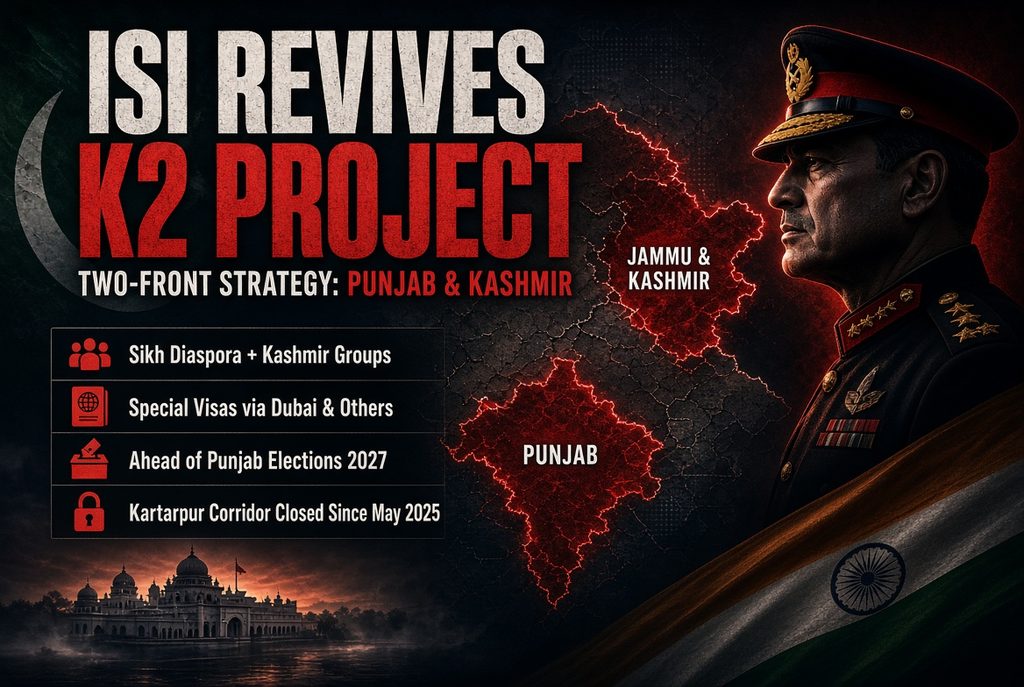
Officials say participants would receive preferential treatment, such as special e-visas, smart-gate immigration processing, and dedicated green channels, similar to state guests.
The objective is to organise high-profile seminars and events that promote the Khalistan and Kashmir narratives, highlight human rights claims, and push for international mediation on both issues.
K2, standing for “Khalistan + Kashmir”, is not a new concept. It originated in the 1980s under then-Pakistan President General Zia-ul-Haq as a strategy to destabilise India by linking Sikh separatism in Punjab with the Kashmir insurgency, creating pressure on two fronts. Indian agencies have tracked related activities for years, including the formation of joint outfits, recruitment efforts, and earlier Dubai-based modules.
The current revival is timed just months before Punjab’s legislative assembly elections, expected in early 2027, when the state is scheduled to elect all 117 members of its assembly.
A second factor is the ongoing closure of the Kartarpur Corridor. India suspended the visa-free pilgrimage route to Gurdwara Darbar Sahib in Pakistan on May 7, 2025, following the Pahalgam terror attack and subsequent Operation Sindoor. The corridor has remained shut due to security concerns, despite appeals from Sikh organisations and the Punjab assembly for its reopening.
According to the report, the ISI hopes pressure from Sikh pilgrims and diaspora voices could help force the corridor’s resumption while also allowing opportunities to identify and cultivate potential assets.
The claims sit against a broader backdrop of reported Pakistani efforts focused on Punjab. In recent months, Indian agencies have investigated alleged ISI-linked networks operating through Dubai for surveillance and recruitment, including the use of Wi-Fi-enabled cameras near sensitive locations. There have also been multiple arrests of modules tied to groups such as Babbar Khalsa International, increased drone-based smuggling of drugs and arms along the Punjab border, and warnings about attempts at political infiltration ahead of polls. These activities are frequently described by Indian security officials as part of efforts to revive Khalistani sentiment while generating funds that could support operations in both Punjab and Kashmir.
The Times of India report frames the alleged K2 revival under Field Marshal Asim Munir as a deliberate attempt to internationalise the issues and create simultaneous pressure. Pakistani officials have historically rejected accusations of supporting separatism or terrorism in India. The report itself presents the information as based on intelligence inputs rather than independently verified public evidence, and it notes the long history of such dual-track strategies without claiming they have succeeded in altering ground realities in either region.
Security analysts following the issue note that while past iterations of the K2 approach coincided with periods of significant violence in the 1980s and early 1990s, subsequent decades saw a sharp decline in organized militancy in Punjab. Whether the current reported plan represents a serious operational threat or primarily a propaganda and narrative effort remains a matter of debate among observers.