


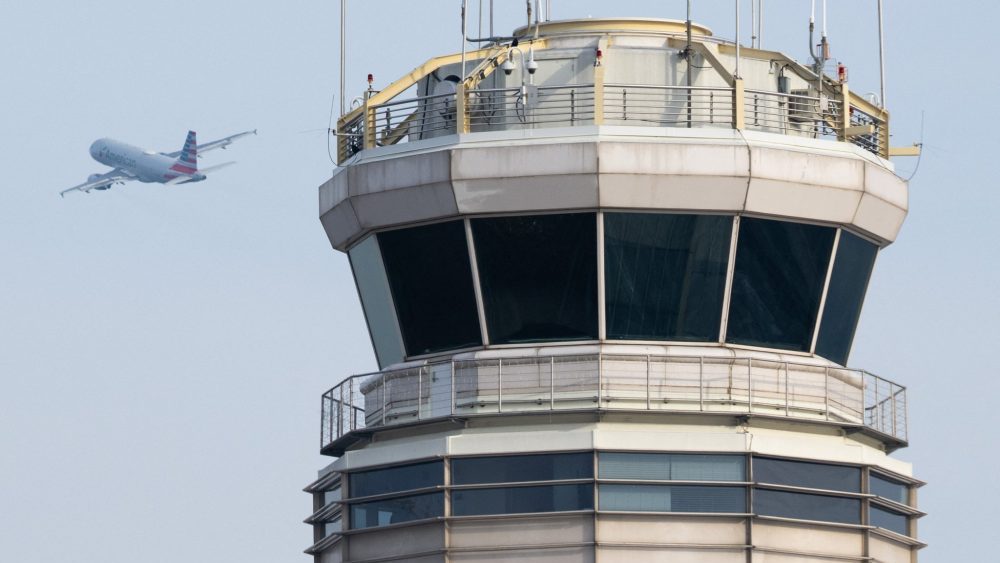
The Federal Aviation Administration’s decision Friday to impose a nationwide ground stop on all departing US flights produced the longest such disruption since the September 11, 2001 attacks, grounding the system for more than four hours and leaving a multi-day trail of cancellations, delays, and stranded passengers.
The order, issued around 3:36–3:54 p.m. Eastern Time on November 13 after communication failures affected all Air Route Traffic Control Centers, halted every domestic departure while more than 3,500 aircraft already airborne were directed to land safely.
Officials attributed the outage to the FAA’s decades-old analog telecommunications infrastructure: switches and routers became overloaded with data, producing inconsistent signals. Transportation Secretary Sean Duffy described the equipment as relying on “1980s little copper lines” that “got overloaded.”
Homeland Security Secretary Markwayne Mullin said there was no evidence of a cyberattack and that safety was never compromised. The stop was lifted around 8:15 p.m. ET, but recovery proved slow.
Immediate Passenger and Operational Fallout
Flight tracking data showed roughly 8,500–10,000 delays and nearly 8,000–10,000 cancellations on Friday alone. By late Friday and into Saturday, nearly 10,000 flights to or from US airports had been canceled. Major carriers bore heavy burdens: Delta and American each canceled more than 2,200 flights, United about 1,800, and Southwest nearly 1,400. Cirium estimated more than 1.5 million passengers were scheduled on roughly 11,000 flights after 4 p.m. ET.
Aircraft that landed waited hours for gates as ramps filled; some waited more than five hours. Diversions numbered in the hundreds. Airports from Atlanta and Chicago to New York, Los Angeles, Boston, and Miami saw crowded terminals, long rebooking lines, and passengers camping on floors or near baggage carousels.
Saturday brought continued disruption, with thousands more cancellations and delays as airlines repositioned aircraft and crews. Officials and analysts warned that the cascade would persist through the weekend and possibly longer as schedules realigned.
Broader Systemic and Policy Effects
The incident spotlighted long-standing vulnerabilities in the US air traffic control network. Duffy and administration officials used the moment to renew calls for a roughly $50 billion overhaul of the aging system—new hardware, software, and telecommunications—arguing that patchwork fixes are insufficient and that Congress has repeatedly delayed full funding.
The outage occurred the same day the White House sought additional billions for airport and ATC modernization. Watchdogs have previously flagged planning gaps and the vulnerability of more than three-quarters of FAA systems.
No injuries or security incidents were reported. All airborne flights were accounted for and landed under established procedures. Airlines advised passengers to check flight status before heading to airports and offered rebooking flexibility. Duffy said flying was safe once the immediate issue was resolved but cautioned that the underlying system remains fragile until comprehensively replaced.
The ground stop ranks as only the third nationwide event of its kind in US history, after 9/11 and a 2023 FAA computer outage. Its effects underscore both the safety priority that drove the FAA’s decision and the operational and economic costs of relying on infrastructure that officials themselves describe as obsolete.
Full schedule normalization is expected to take days, with ripple impacts on crew, aircraft positioning, and connecting itineraries nationwide.