


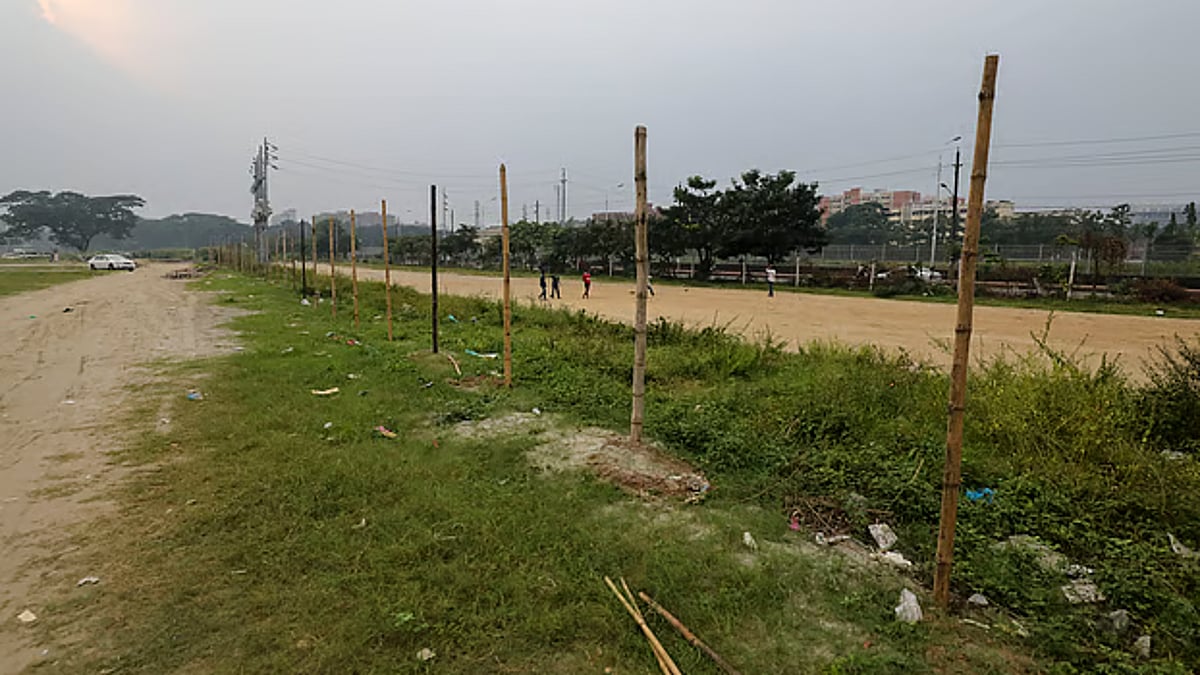
The ruling BNP government has approved the relocation of the Bangladesh Secretariat to the former trade-fair venue in Agargaon, adjacent to the National Parliament Building, a site long used as public open space and a playground by children and residents in a city already starved of fields.
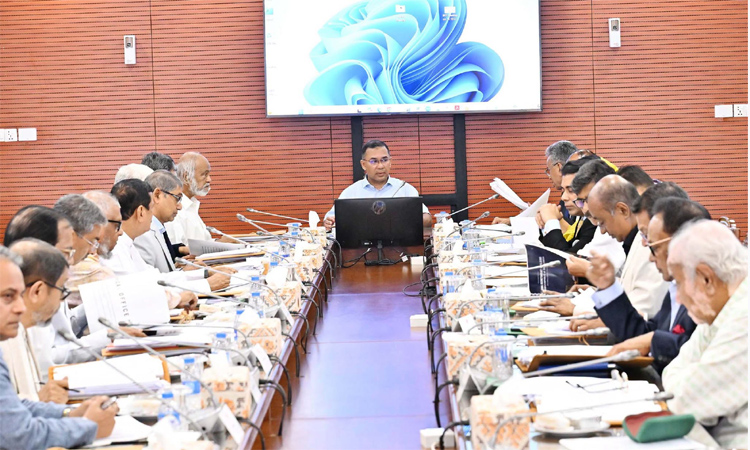
The approval came at the 25th Cabinet meeting of the government, chaired by Prime Minister Tarique Rahman at the Bangladesh Secretariat on 18 October. Briefing reporters at the conference room of the Press Information Department after the meeting, Cabinet Secretary Nasimul Gani said the entire project would be implemented with the government’s own funds. Work is targeted for completion by 2029, when offices are expected to begin functioning at the new site.
According to the conceptual architectural design prepared by the Department of Architecture, the proposed complex will comprise fourteen 12-storey buildings with three basement levels on roughly 31.58 acres, providing a total floor space of around 33.16 lakh square feet. The complex will have parking facilities for 3,800 vehicles, including only 200 above-ground parking spaces. Other facilities will include a mosque, two multipurpose halls with a capacity of 350 people each, a cafeteria and a post office. Around 30 percent of the project area has been earmarked for greenery and water bodies, the cabinet secretary said. The existing Secretariat occupies around 17 acres of land.
The decision has drawn sharp condemnation from environmentalists, urban planners and citizens. They expressed deep concern over the plan to build a large multi-storey secretariat complex on the open space next to the National Parliament Building. They argued that the open grounds, green areas and visual setting form an integral part of the architectural heritage and dignity of Louis Kahn’s iconic Parliament complex.
Placing dense administrative buildings there risks undermining the building’s prominence, historical setting and the planned landscape of Sher-e-Bangla Nagar.
Activists further stressed that Dhaka is steadily losing open spaces, playgrounds and green areas. Treating the Agargaon ground merely as vacant land for a massive administrative complex would further restrict citizens’ opportunities for recreation, physical activity and social gathering. The organisation also warned of severe additional pressure on already congested roads around Agargaon and Rokeya Sarani from the daily movement of thousands of officials, employees and vehicles, calling for full traffic-impact and integrated transport studies before any decision. It urged reconsideration of the site in light of long-term administrative needs, possible decentralisation, and the requirements of the Bangladesh National Building Code, DAP 2022-2035 and heritage conservation rules.
The irony has not gone unnoticed. Only days earlier, on 8 October, Prime Minister Tarique Rahman directed authorities to establish at least one playground in every union and set up at least 1,000 new fields nationwide within two months, including measures to ensure playgrounds for every two-to-three wards in Dhaka’s city corporations, so that children and young people have adequate space for sports and healthy development.
Critics say approving a large secretariat complex on one of the capital’s remaining open grounds directly undercuts that pledge and prioritises administrative convenience over children’s needs and the city’s scarce public space.
Environmental and civic groups have demanded that the plan be suspended pending proper impact assessments, public consultation and exploration of alternative sites better served by multi-modal transport, rather than further concentrating government functions in an already dense area while diminishing open space next to a national architectural landmark.