


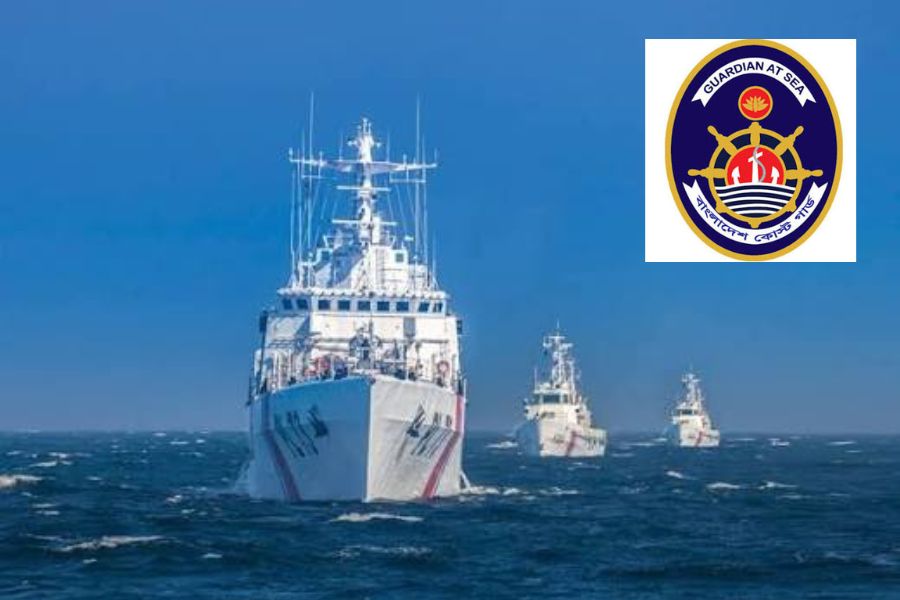
Bangladesh is strengthening surveillance over its 47,203-square-kilometre coastal and maritime area with an integrated system that will use drones and fast-moving vessels to combat marine crimes.
The new approach will cover the southern coastlines, seaports, major shipping routes, marine resources and communities across the country’s 19 coastal districts, Bangladesh Coast Guard (BCG) Lieutenant Commander Sabbir Alam Sujan told BSS.
“Drones, modern patrol vessels, advanced communication systems and integrated maritime surveillance technologies are creating new opportunities for the force,” he said.
Challenges of Conventional Patrols
Round-the-clock monitoring of the long coastline, remote chars and vast maritime zones remains difficult with traditional methods alone. The Coast Guard faces persistent threats including piracy, forest banditry, human trafficking, drug smuggling and other illicit activities in coastal areas and the Bay of Bengal.
Adverse weather, rough seas and remote locations further complicate operations, prompting a shift toward technology-driven surveillance, Sujan noted.
New Equipment and Plans
In April 2026 the force added three surveillance drones and a ground control station. Construction of a multipurpose response vessel and two offshore patrol vessels is under way with support from the Japan International Cooperation Agency (JICA). The Coast Guard also plans to acquire helicopters as part of a broader integrated maritime surveillance system.
Drones can monitor designated areas, track vessel movements and identify potential threats. Rapid transmission of this data will allow patrol vessels and coastal stations to respond more quickly.
Call for Better Coordination
Commodore (retd) Syed Misbah Uddin Ahmad, Director General of the Bangladesh Institute of Maritime Research and Development (BIMRAD), stressed the need for stronger coordination among the Bangladesh Navy, Coast Guard and other government agencies to protect maritime security and resources.
He suggested establishing a dedicated ministry for maritime affairs or the Bay of Bengal, along with a coordination committee involving the Navy, the ministries of home affairs and environment, and other relevant bodies. He pointed to similar arrangements in neighbouring countries, such as India’s Ministry of Ports, Shipping and Waterways and Pakistan’s Ministry of Maritime Affairs.
“All agencies need to work in a coordinated manner with modern technology and adequate manpower,” he said.
Maritime Domain Awareness
Ahmad emphasised the importance of Maritime Domain Awareness (MDA) — the ability to monitor and understand activities at sea. Coordinated use of radar, the Automatic Identification System (AIS), satellites, drones and intelligence sharing can help counter piracy, drug and arms smuggling, human trafficking and illegal fishing. These capabilities also support search-and-rescue operations and the conservation of marine resources.
Effective surveillance, he added, requires skilled personnel, regular equipment maintenance, reliable communications and timely information sharing to respond swiftly to emerging threats.