


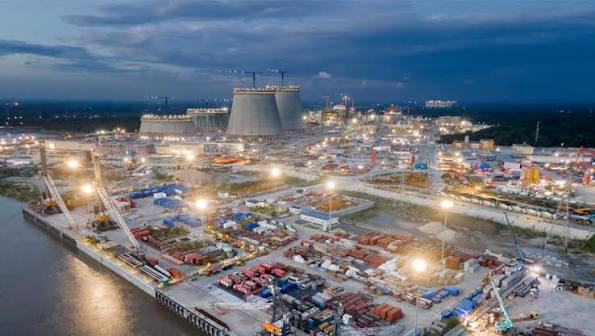
Another shipment of uranium fuel imported from Russia has arrived at the Rooppur Nuclear Power Plant (RNPP) in Pabna. In the early hours of Saturday (14 November), around 5:30 am, the fuel was transported into the project area in three specialised lorries under tight security.
This is the fifth shipment for the second unit. Including one earlier shipment for the first unit, a total of six consignments have now reached the plant.
Army personnel and members of other law-enforcement agencies were deployed to ensure security during the transportation of the fuel.
Under the plan of Russia’s state nuclear corporation Rosatom, 163 uranium assemblies for the second unit are to be brought in seven cargo flights. In addition, two further cargoes carrying 48 assemblies are planned for future refuelling of the first unit. Altogether, these fuel consignments are expected to arrive in Bangladesh in a total of nine shipments.
Meanwhile, preparations to start the plant’s first unit are also progressing. The “Power Startup Stage-C” phase is currently under way. On 29 October, the Chairman of the Bangladesh Atomic Energy Regulatory Authority (BAERA) granted permission to begin activities at this stage.
During this phase, reactor power will be raised step by step to test the performance of various plant systems, turbines, generators and safety mechanisms. Once these tests are completed satisfactorily, the generator of the first unit will be connected to the national power transmission grid — a process known as synchronisation.
According to the project schedule, the first unit aims to begin supplying approximately 300 MW of electricity experimentally to the national grid this November. Whether supply actually starts on schedule will depend on the successful completion of the required tests and regulatory approval.
The Rooppur Nuclear Power Plant, built with Russian technology, has two VVER-1200 units. When both units become fully operational, they are expected to boost the country’s electricity generation capacity and play an important role in ensuring long-term energy security.