


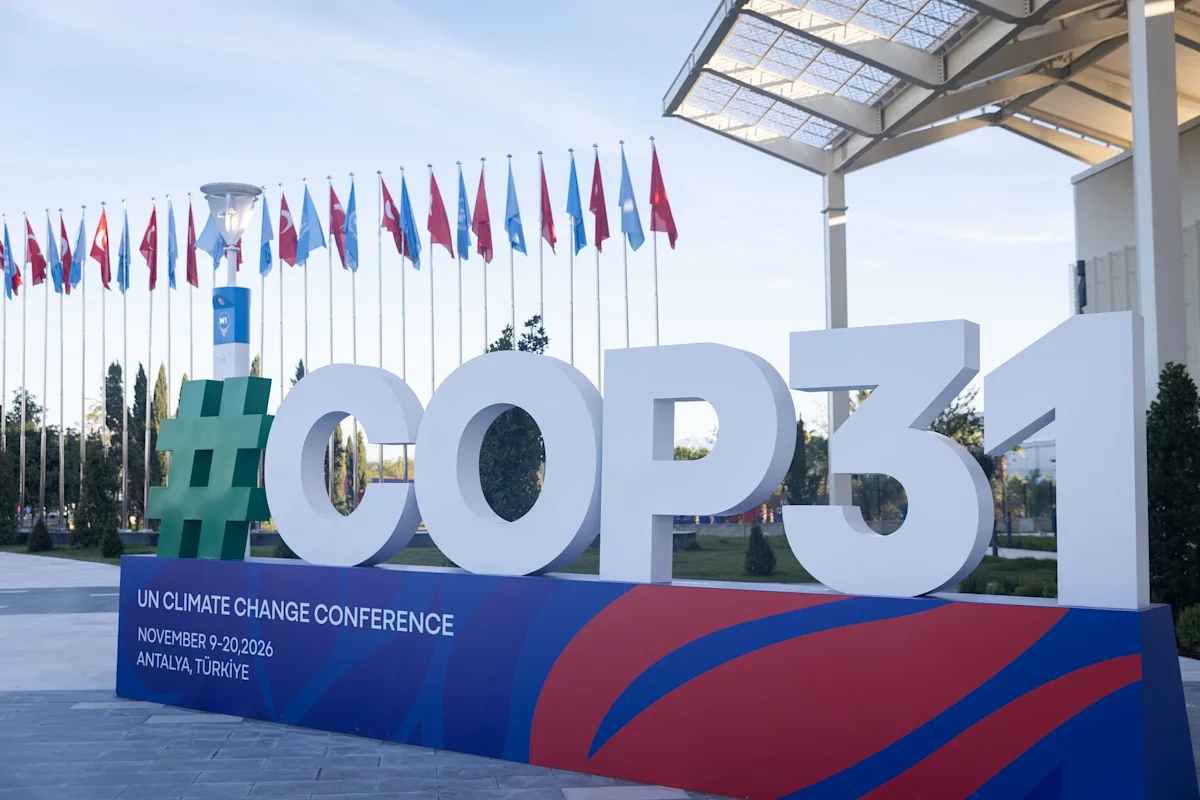
Bangladesh has bagged approximately Tk 784 crore in climate grants from two international funds during the COP31 conference in Antalya, Turkey. The total could rise to around Tk 1,058 crore if an additional tranche from the Global Shield is approved.
Dr Saimum Parvez, Special Assistant to the Prime Minister for Forests, Environment and Climate Change, briefed journalists at Hazrat Shahjalal International Airport after returning early today. He confirmed that Bangladesh obtained US$30 million (about Tk 374 crore) from the Climate Investment Funds (CIF) and €30 million (about Tk 410 crore) from the Global Shield.
An extra €20 million (roughly Tk 273 crore) from the Global Shield remains contingent on successful implementation of the programme’s first phase. “If the additional funding is secured, the total grants from the CIF and Global Shield will reach around Tk 1,058 crore,” he said. All funds are pure grants and do not require repayment.
The CIF money will be channelled through the government for project implementation, while Global Shield support will assist both public and private institutions in managing climate risks, including through insurance mechanisms. The Economic Relations Division (ERD) will oversee the process.
Bangladesh’s Advocacy at COP31
Bangladesh pushed for at least 50 percent of global climate finance to go toward adaptation and called for increased funding for emission reductions. It also stressed the need for grant-based financing, warning that a growing shift toward loans and investments is creating difficulties for developing countries.
“Bangladesh, alongside other Global South countries, has called for grant-based climate financing. Where loans are necessary, we have advocated providing them on concessional terms,” Dr Saimum said.
He described the Prime Minister’s presentation of Bangladesh’s five-point demands and delivery of the national statement as a major success. The Prime Minister also held several bilateral meetings during his nearly 48-hour visit. The delegation continued negotiations aligned with those demands and remained engaged in final-stage talks with other Global South countries when Dr Saimum left the extended conference.
Mangroves, Delegation, and Carbon Credits
Dr Saimum represented Bangladesh at a ministerial meeting of the Mangrove Alliance, where countries discussed future cooperation. Bangladesh aims to restore and expand its mangrove forests, involve local communities in conservation, and improve the livelihoods of people who depend on these ecosystems through international grants and partnerships.
The delegation included government officials, NGO representatives, development partners, young climate activists, and journalists. Some participants received financial support from international partners, and more than 40 side events were held at the Bangladesh Pavilion. Future delegations will place greater emphasis on the ability of participants to contribute effectively to negotiations.
On carbon markets, Dr Saimum said Bangladesh has been preparing documentation for the past seven to eight months. During COP31, the team held discussions with other countries, the Gold Standard, and the Global Carbon Council to explore revenue opportunities from carbon credits. He expressed hope that concrete progress would be made in the coming months, with transaction details to be disclosed once finalised.