


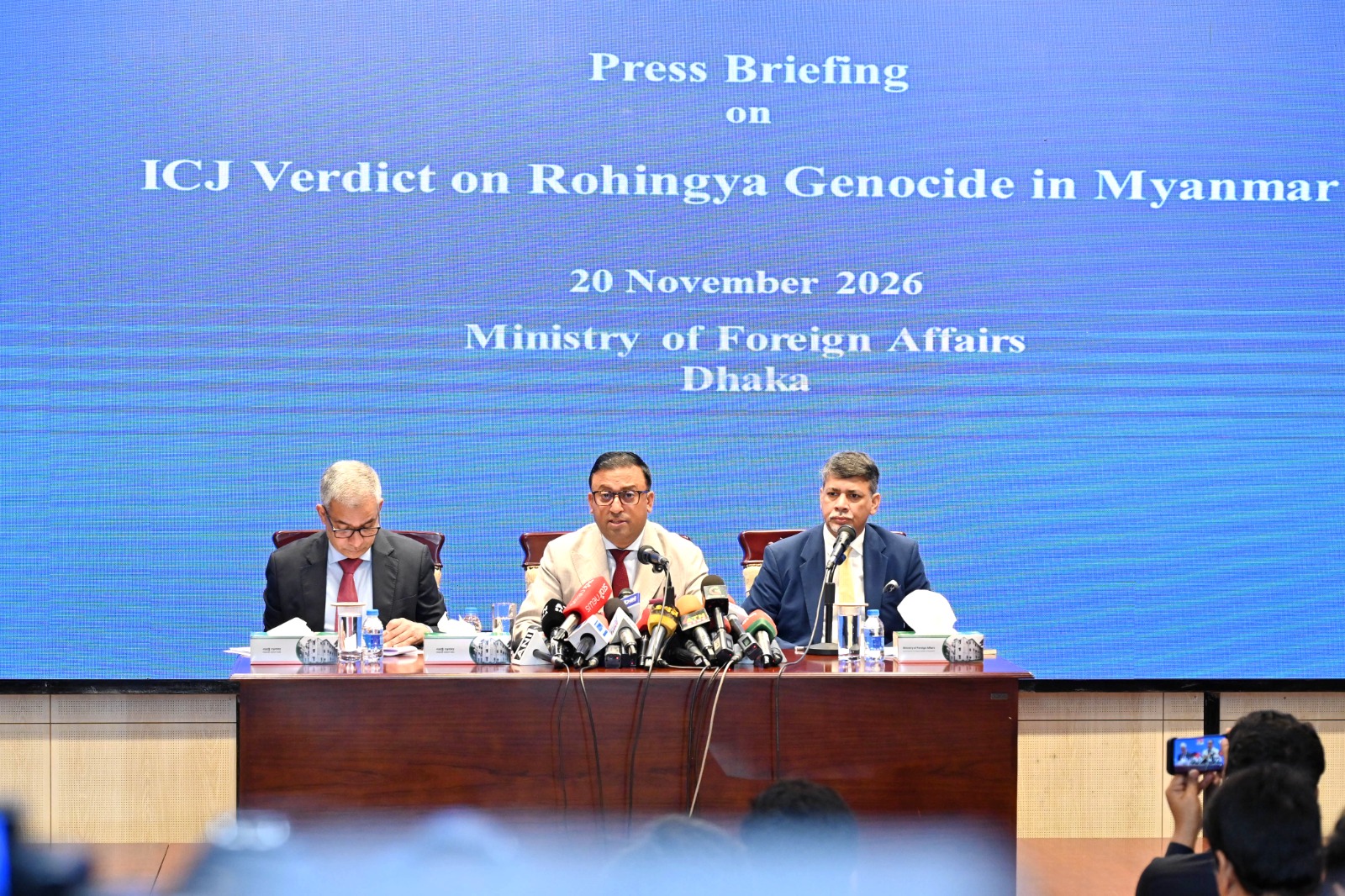
Bangladesh will intensify diplomatic efforts with the United Nations and bilateral partners to secure safe, voluntary repatriation of Rohingya refugees to Myanmar within 12 to 18 months, State Minister for Foreign Affairs Humaiun Kobir said on Friday.
Speaking at a media briefing on the International Court of Justice (ICJ) judgment delivered the previous day, Kobir said the ruling strengthened Dhaka’s legal and diplomatic hand. “We will pursue these discussions vigorously so that we can provide safe passage within a year to a year and a half,” he told journalists. Any return, he stressed, would depend on establishing credible safeguards in Myanmar’s Rakhine State so Rohingya could go home safely and rebuild their lives.
Historic ICJ Finding
On November 19, the ICJ ruled by a 9–6 majority that Myanmar committed genocide against the Rohingya in northern Rakhine State during the 2017 “clearance operations,” in violation of the 1948 Genocide Convention. It is the first time the court has found a state responsible for committing genocide. The court recognised the Rohingya as a distinct ethnic group and found that Myanmar’s security forces carried out mass killings, widespread sexual violence, and the systematic destruction of villages, with genocidal intent to destroy a substantial part of the group.
The judgment is final, binding, and not subject to appeal. It orders Myanmar to facilitate the safe, voluntary, and dignified return of displaced Rohingya and family reunification; provide restitution (including return or replacement of property); compensate victims; investigate and, where warranted, prosecute those responsible; enact effective legislation to prevent genocide; and protect the Rohingya from discrimination and persecution. Myanmar must report to the court within two years on the measures taken. The court also found Myanmar breached its 2020 provisional measures order by failing to preserve evidence.
The case was brought by The Gambia in November 2019 with the backing of the Organisation of Islamic Cooperation (OIC). Bangladesh, which closely followed the proceedings though not a party, thanked The Gambia, the OIC, intervening states, Rohingya advocates, and host communities in Cox’s Bazar.
Scale of the Crisis and Repatriation Challenges
Bangladesh hosts roughly 1.2 million Rohingya refugees—the world’s largest refugee settlement—mostly in Cox’s Bazar camps. The 2017 military campaign forced more than 700,000 people across the border amid reports of mass killings, gang rape, and burned villages. Earlier smaller waves of displacement had already occurred. Before 2017, about 1.1 million Rohingya lived in Myanmar; estimates now put the number remaining in Rakhine at around 600,000, including many in internal displacement camps.
Previous bilateral repatriation plans in 2018 and 2019 produced virtually no returns because conditions were not safe and Rohingya demanded full rights, citizenship, and dignity. Myanmar has verified some of those in Bangladesh camps as former Rakhine residents (including a figure of roughly 308,000 cited earlier) but has said returns can begin only when security improves. Ongoing conflict in Myanmar since the 2021 military coup, including fighting involving the Arakan Army in Rakhine, continues to make large-scale safe returns unrealistic in the near term, according to aid groups and analysts.
Kobir described prompt and sustainable repatriation as the only effective solution to the protracted crisis. Bangladesh will work through the UN system and with partners on both safe return and compensation. He noted that bilateral mechanisms alone are insufficient for reparations and that financial compensation cannot erase the loss of life or the suffering of families, though Dhaka will press Myanmar to provide compensation and other measures to help survivors rebuild. He gave no commitment to formally proposing an international peacekeeping force in Rakhine but said Dhaka would engage a wider range of UN agencies and partners if the issue reached the Security Council.
He also called on the international community and donors to act swiftly on the judgment and to continue humanitarian assistance for both Rohingya refugees and Bangladeshi host communities until repatriation is complete. Funding shortfalls have already strained camp services.
Foreign Secretary Salahuddin Noman Chowdhury and others were present at the briefing.
The ICJ ruling has been welcomed in the camps as long-awaited recognition and a potential catalyst for renewed diplomatic pressure, even as many refugees and observers remain cautious about the practical prospects of a safe, dignified return amid Myanmar’s ongoing instability.