


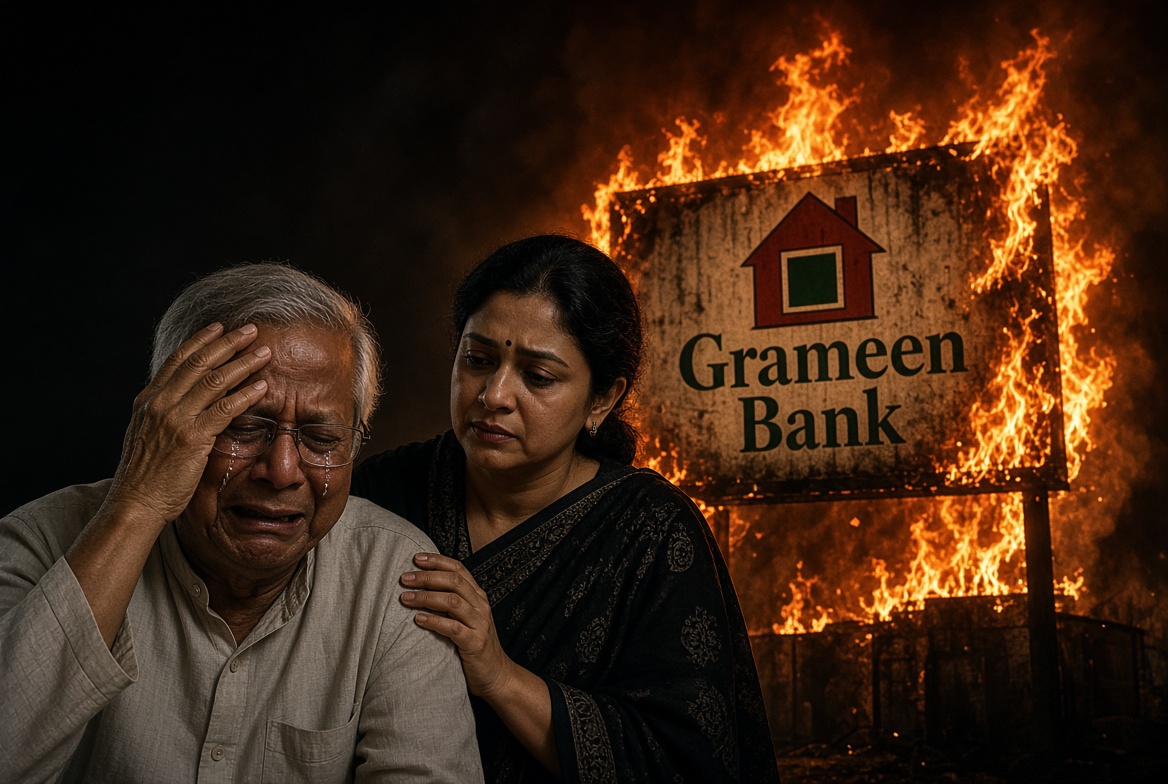
By Probir Kumar Sarker When Italian journalist and long-time Yunus associate Enzo Cursio posted a solidarity message with Nobel Peace laureate and former interim government chief adviser Muhammad Yunus on Facebook this week, the response was not the outpouring of international support his circle appeared to expect.
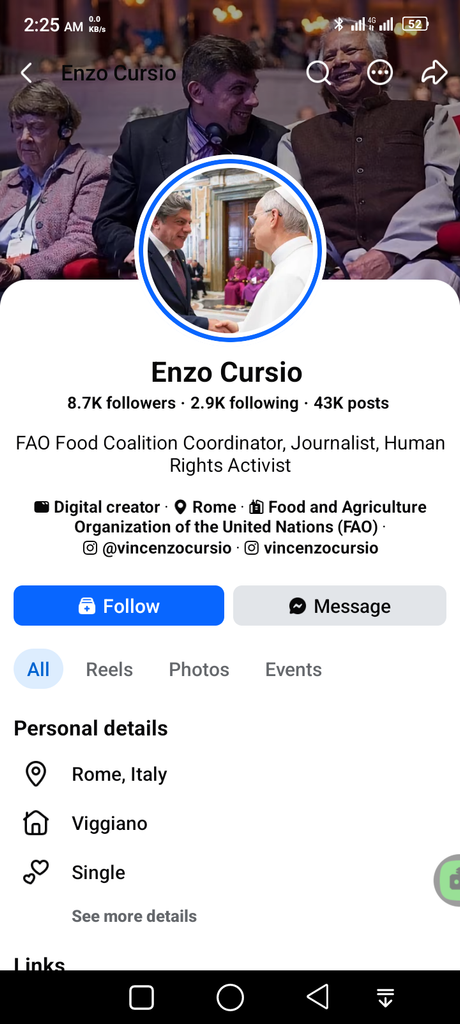
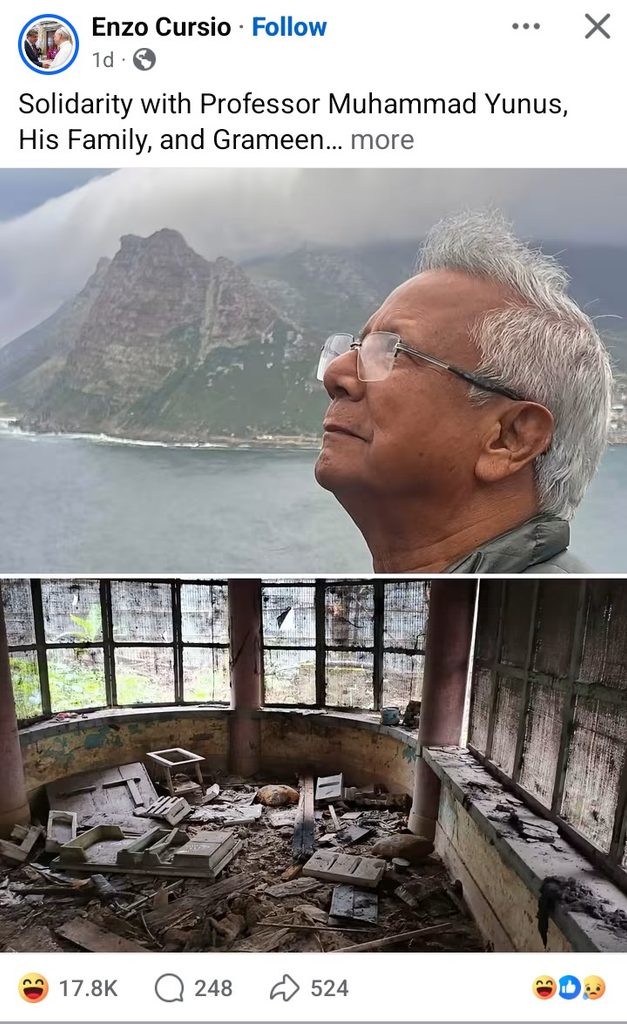
Cursio, who describes himself as FAO Food Coalition Coordinator, journalist and human rights activist based in Rome, wrote of standing with Yunus, his family and Grameen amid reports of arson and vandalism targeting the bank’s branches.
He tagged associates including Lamiya Morshed, executive director of the Yunus Centre and long-time close aide who served in senior coordinating roles during Yunus’s 18-month interim administration.
By midnight the post had drawn roughly 17,800 reactions and hundreds of shares.
The breakdown was striking: more than 7,900 “haha” reactions against roughly 5,400 likes, only 513 love reactions and a handful of care or sad responses.
At one point, Cursio closed the comment section.

The “haha” emoji dominated, a pattern that on Bangladeshi social media often signals ridicule or schadenfreude rather than amusement at a joke.
Lamiya Morshed replied thanking Cursio and saying “We are all a bit shell shocked.”
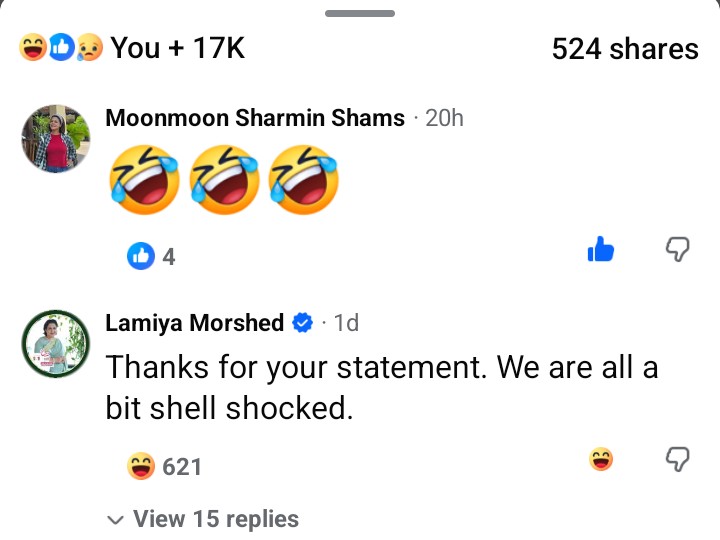
Her comment itself received 621 reactions—overwhelmingly “haha” (504), with just 11 love reactions and a few sad ones.

The same pattern appeared across related posts and reaction lists, where many of the accounts reacting were Bangladeshi users rather than the international network Yunus has long cultivated.
The episode arrives as Grameen Bank has reported 72 of its branches and offices attacked or targeted in arson attempts between 10 and 19 November 2026, according to the bank’s own internal accounting and multiple Bangladeshi media reports.
Gopalganj saw the highest number of incidents, where Yunus had sent army personnel to protect his NCP mob leaders, and five Awami League supporters were shot dead last year for preventing attacks to dismantle the mausoleum of Father of the Nation Bangabandhu Sheikh Mujibur Rahman at Tungipara.
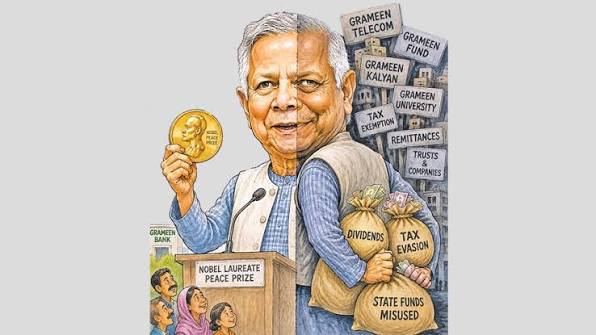
Assailants used petrol, petrol bombs, kerosene and similar methods; some branches suffered major damage to furniture, documents, CCTV systems and interiors while others saw only minor or failed attempts. Yunus’ ancestral home in Chattogram’s Panchlaish was also set ablaze. The bank has condemned the attacks as threats to the savings, loans and livelihoods of its more than 10 million mostly poor members and has sought greater protection.
Police and reports have linked many of the incidents to supporters of the banned Awami League amid a broader wave of violence that included an AL “lockdown” call, explosions and attacks on other targets.

Yunus’s former press secretary Shafiqul Alam, now editor of Daily Waadaa, publicly questioned the near-silence of civil society and rights groups, noting that only about 15 former advisers from the Yunus administration had condemned the attacks. BNP, Jamaat-e-Islami and the National Citizen Party (NCP)—all of which had stakes in or cooperated with the interim period—blamed Awami League activists.
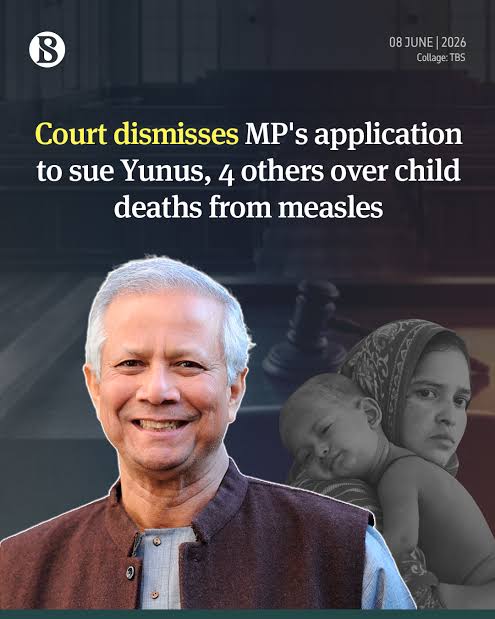
Senior journalists offered sharper interpretations. Former New York Times correspondent Arshad Mahmud framed the attacks as accumulated anger among Hasina-era supporters, pointing to Yunus’s irritable September 2024 Voice of America response (“ask his daughter”) when questioned about the destruction of the historic Dhanmondi 32 house linked to Sheikh Mujibur Rahman.
Mahmud suggested the current targeting of Grameen represents parallel score-settling and warned that the bank’s headquarters and Yunus Centre could face further risk if political conditions shift again. He also criticised what he called opportunistic silence from some civil society figures who had benefited during the interim period and raised longstanding allegations involving tax cases, employee dues, appointments and use of official power in relation to Grameen-linked entities.

Journalist Anis Alamgir, who had earlier predicted possible backlash against Grameen and Yunus-linked properties after the Dhanmondi 32 incidents, rejected calls for his arrest over those remarks. He described them as a forecast of political consequences rather than incitement, comparing the reaction to blaming a weather forecaster for rain.
The larger backdrop is the sharp polarisation that has defined Bangladesh since the 2024 student-led uprising that ousted Sheikh Hasina and brought Yunus to the interim leadership through a meticulously designed jihadist-army coup.
During those 18 months the Awami League was banned, thousands of its activists and supporters were arrested, mob violence occurred in multiple areas, properties were looted or torched, and critics described a climate of selective justice, indemnity for some perpetrators and erosion of Liberation War symbols and history.
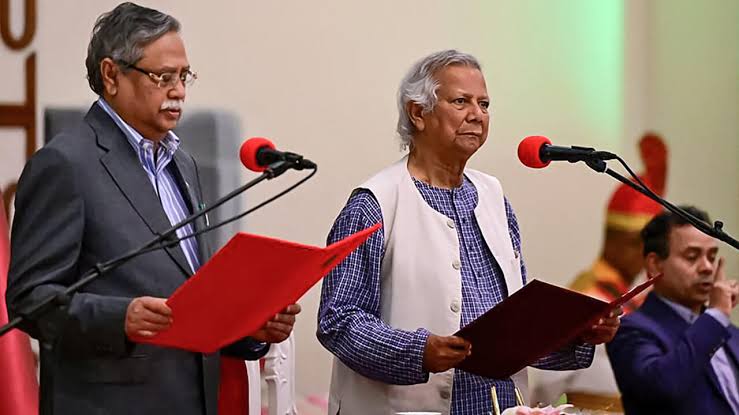
After the interim period, violence has continued under the subsequent political arrangement in which BNP has been a major stakeholder.
Grameen Bank itself has repeatedly stressed that it is a statutory institution majority-owned by its borrower-members, not a private vehicle of any individual.
Yunus’ global reputation was built over decades on microcredit, social business, and poverty alleviation, earning the 2006 Nobel Peace Prize jointly with Grameen Bank, though critics say microcredit can never alleviate poverty.
That image is now contested at home by accounts of the interim period’s governance failures, legal cases, and perceived vengefulness.
The flood of “haha” reactions to Cursio’s solidarity post—and to Lamiya Morshed’s reply—functions as a visible, real-time barometer of that erosion among a large domestic audience. International allies and lobbyists continue to push narratives of persecution and the need to “stand with Yunus,” but the reaction numbers suggest many Bangladeshis view the current attacks through the lens of recent history rather than pure victimhood.
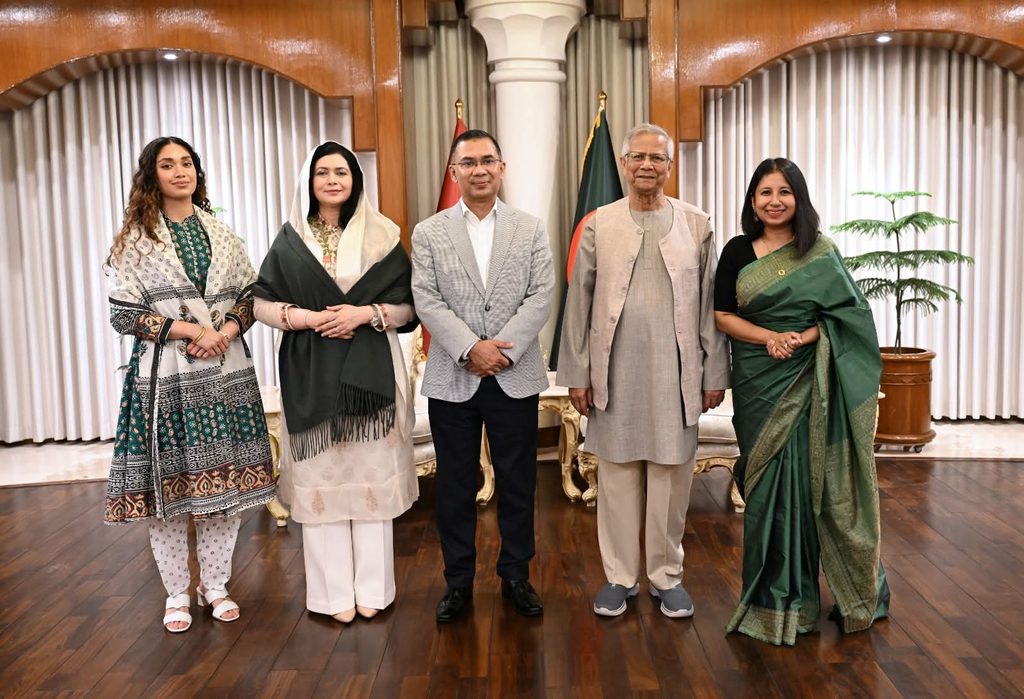
The attacks themselves remain serious: they damage an institution that serves millions of poor households, and the United Nations has called for investigations into the violence.
Yet the disparity between the intended global sympathy campaign and the dominant Facebook response indicates that Yunus’s domestic standing has shifted more decisively than many of his long-time international advocates appear to have registered.