

Leaders of Hefazat-e-Islam Bangladesh have declared that no one has the right to decide the political future of the banned Awami League outside the wishes of martyrs’ families and the injured from events including the July 2024 uprising, the 2013 Shapla Chattar incident, Pilkhana, and anti-Modi protests.
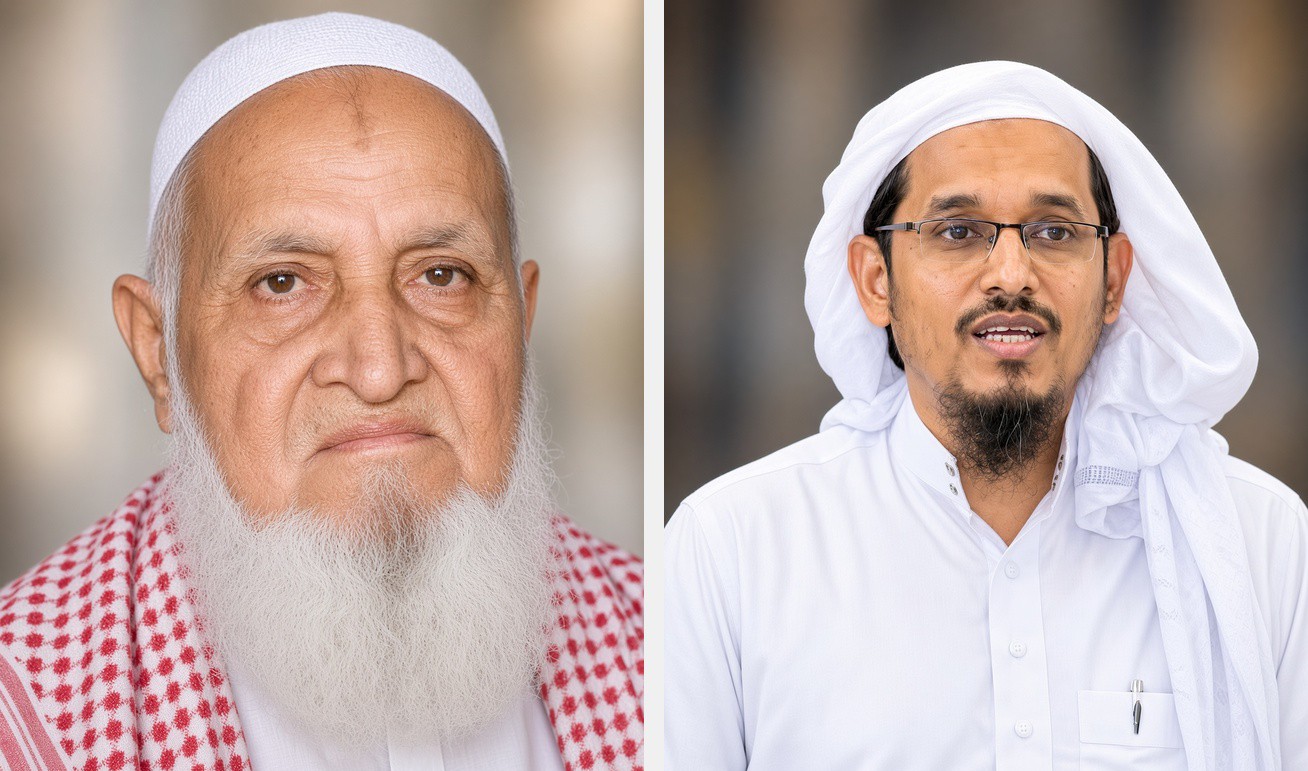
In a joint statement issued today by Amir Allama Muhibbullah Babunagari and Secretary General Allama Sajedur Rahman (circulated by Joint Secretary General Maulana Azizul Haque Islamabadi), the organisation stated: “No one has the right to take any decision regarding the genocidal fallen fascist Awami League beyond the aspirations of the victim martyr families and the injured.”
The statement described the Awami League, whose political and organisational activities have been banned pending judicial processes, as no longer a political party. It alleged that its leaders and workers fled to India after the July mass uprising, acting as “agents of hegemony,” and that with Delhi’s support the “defeated force of Awami fascism” is attempting to destabilise Bangladesh through arson and terrorist activities while dreaming of another “one-eleven” scenario.
The leaders said they would turn that dream into a nightmare, and warned that media outlets seen as advancing an anti-Bangladesh agenda would not be spared in any future mass resistance.
They noted that victims of the Pilkhana, Shapla, July, and anti-Modi events still await justice, and claimed public anger is growing against those who continue to speak in talk shows and platforms in line with the “agenda of fallen Awami fascism and hegemony.” The statement recalled that the party had been given a chance to return to politics in the past, including after a “deceptive apology” in 1996, but did not reform. After 15 years in power involving enforced disappearances, killings, and successive massacres, it argued, the party has no remaining political legitimacy in Bangladesh.
Eradicating “Awami terrorism and fascism,” it said, is necessary to protect independence and sovereignty. It called for united mass resistance alongside an exemplary judicial process at the tribunal to ban the party as a whole for genocide.
The statement further claimed that no third country has agreed to shelter Sheikh Hasina, convicted of crimes against humanity, despite efforts by a “master state,” arguing that no civilised country wants to face international questions by harbouring such a person. It cited The Guardian describing her as a “disgraced former leader” and The Economist referring to her rule as “worst governance,” stating that international media have exposed her character and that history records the end of arrogant “mafia rulers.”
Hefazat-e-Islam is a Qawmi madrasa-based Islamist platform that gained prominence in 2013 through large-scale mobilisations and a 13-point charter of demands focused on Islamic principles in law and governance, anti-blasphemy measures, and related issues. Their members were found involved with al-Qaeda and ISIS operations from 2013 to 2019. They also forced the Awami League government to launch crackdown on atheist and secularist bloggers, revise textbooks and donate land and money to Hefazat.
Since the 2024 changeover, it has repeatedly called for a ban on the Awami League through judicial processes. Hefazat supporters carried out armed attacks on police stations, Awami League-linked houses and businesses, Hindu temples and households, shrines and moral policing alongside hoisting of kalema flags. The organisation has engaged closely with the current BNP-led government under Prime Minister Tarique Rahman; the prime minister met Hefazat leaders earlier in 2026, and the group submitted a revised set of demands, including the revocation of secularism from the Constitution. Recently, Hefazat formed a seven-party alliance of Islamist groups.
The Awami League’s activities were restricted and it was barred from contesting the 2026 elections after the 2024 uprising that ousted Sheikh Hasina. Cases related to the July events and earlier incidents remain before the International Crimes Tribunal (ICT-BD). The party has rejected characterisations of genocide and fascism, framing actions against it as political persecution, while reports from various sources have documented both the scale of deaths and injuries during the 2024 protests and subsequent incidents involving its supporters.