


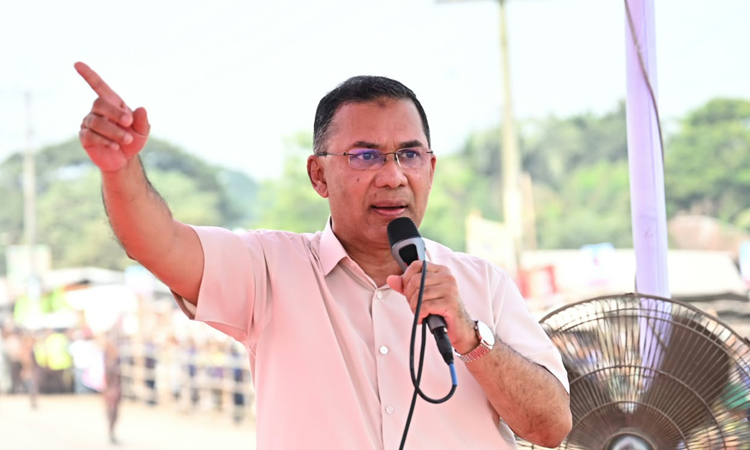
Prime Minister Tarique Rahman has stated that the previous government’s policies systematically weakened Bangladesh’s health sector, particularly rural services, to compel citizens to seek medical treatment in a particular foreign country.
He made the remarks in Parliament on Monday while outlining plans for dedicated healthcare facilities for industrial workers.
“Because of the previous government’s policies, people in this country had to depend on a particular foreign country for medical treatment,” the Prime Minister said. He added that the earlier administration had gradually dismantled healthcare structures built under previous democratic governments, creating conditions that left ordinary people with little choice but to travel abroad for care. The same approach, he noted, had increased reliance on imports in other sectors such as energy rather than developing domestic capacity.
The comments come as Bangladesh’s health system faces overlapping crises. The country is experiencing its largest measles outbreak on record. Since mid-March 2026, authorities have reported more than 230,000 suspected cases and over 1,200 measles-linked deaths (including confirmed and suspected fatalities), the vast majority among children.
Experts and officials have linked the outbreak to sharp drops in routine immunisation coverage in 2024 and 2025, postponement or cancellation of measles-rubella campaigns, and failures to import vaccines during both the previous administration and the subsequent interim period.
Vaccination coverage fell well below the levels needed for herd immunity, leaving large numbers of children unprotected. Hospitals have struggled with overcrowding, with many patients treated on floors and in corridors.
Dengue is adding further pressure. As of 9 November 2026, the Directorate General of Health Services reported 466 dengue deaths this year and more than 152,000 hospital admissions. Five deaths and 2,260 new admissions were recorded in the preceding 24 hours alone. The figures represent a substantial increase over the same period last year, with Dhaka and Khulna divisions recording the highest burdens.
Public health experts have warned that delayed diagnosis, late hospital presentation, and strained facilities continue to drive preventable fatalities.
The interim government period also saw deep structural problems. All long-term health operational plans (OPs)—38 programmes covering primary care, vaccination, maternal and child health, disease control, and hospital management—were abruptly suspended and replaced with an unrealistic short-term project model.
This disrupted procurement, left thousands of health workers unpaid for months, and halted essential services. Vaccine supply chains collapsed, contributing directly to the later measles crisis. At the same time, serious allegations of nepotism and bribery emerged involving senior officials.
Personal officers linked to the then health adviser were accused of collecting large sums (reportedly ranging from hundreds of thousands to millions of taka per posting) for the appointment and transfer of doctors, civil surgeons, medical college principals, directors, and nurses. Investigations were later opened, but the episodes further eroded public confidence in the system.
These accumulated failures—policy decisions under the previous government that prioritised external dependence, followed by administrative collapse and corruption during the interim period—have left the health sector fragile.
The current administration has announced measures including higher budget allocations, plans to raise health spending toward 5 percent of GDP, tax reductions on critical medical equipment, upgrades to upazila facilities, and the new worker-focused hospitals in industrial zones such as Tongi, Ashulia, Kaliakair, Narayanganj, Savar, and Chattogram.
Officials say restoring trust through better domestic services is essential to reduce the estimated multi-billion-dollar annual outflow for treatment abroad.