


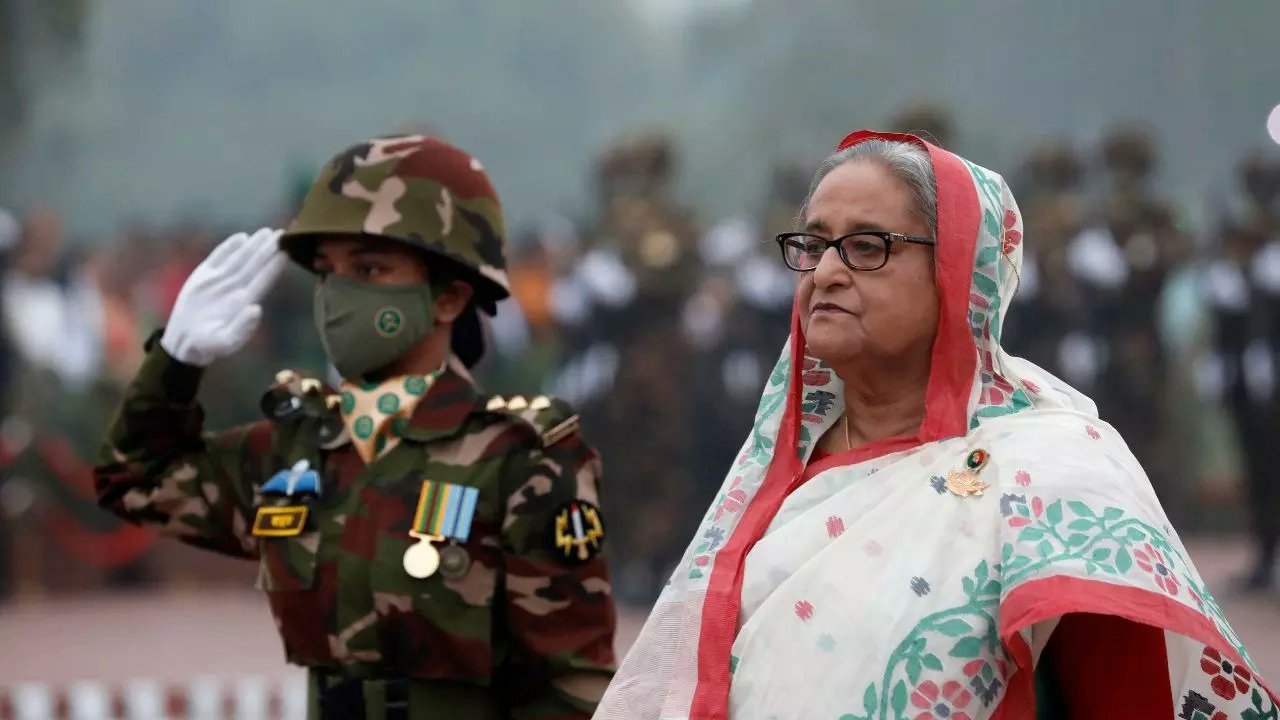
Former Bangladeshi Prime Minister Sheikh Hasina has welcomed the International Court of Justice’s (ICJ) historic judgment holding Myanmar responsible for genocide against the Rohingya minority during the 2017 “clearance operations” in northern Rakhine State.
In a statement issued on 19 November, shortly after the ICJ delivered its ruling in The Gambia v. Myanmar, Hasina described the decision as “an important step forward for international justice and the return of the Rohingya to their homes in Rakhine State.” She called on all UN Member States “to uphold this judgment and ensure that it is respected by Myanmar.”
The ICJ found, by a vote of nine to six, that Myanmar violated the Genocide Convention by killing members of the Rohingya group, causing them serious bodily or mental harm, and imposing measures intended to prevent births, with the intent to destroy a substantial part of the Rohingya population. It is the first time the Court has found a State responsible for committing genocide. The judgment also ordered Myanmar to cease ongoing violations, investigate and punish perpetrators, provide reparations (including enabling safe and voluntary returns), and report on measures of restitution and compensation within two years.
Hasina highlighted Bangladesh’s role under her leadership in responding to the 2017 crisis, during which close to one million traumatized Rohingya refugees fled into Bangladesh. “As Prime Minister of Bangladesh, I welcomed close to one million traumatized Rohingya refugees fleeing Myanmar during the ethnic cleansing operations in 2017,” she stated.
She noted that she instructed her counsel, Professor Payam Akhavan, to pursue accountability at the International Criminal Court based on Bangladesh’s jurisdiction, which led to an arrest warrant being issued in 2024 for crimes against humanity. She also said she worked within the Organization of Islamic Cooperation to secure diplomatic and financial support for The Gambia to bring the ICJ case, and that Bangladesh played a central role in investigations and gathering evidence from witnesses and survivors in the refugee camps. “Those efforts have now come to a successful conclusion,” she added, calling it “a proud moment for Bangladesh.”
Hasina reaffirmed her commitment to international justice while criticizing the current situation in Bangladesh. “It is unfortunate that, from its position of leadership on these issues, Bangladesh is today mired in human rights abuses, political persecution, chaos and decline,” she said. She expressed hope that “Bangladesh will rise again and contribute its share to building a stronger UN and improving global governance for the betterment of humankind’s future.”
Hasina fled Bangladesh in August 2024 after a student-led uprising toppled her government. There has been no immediate official reaction from the current Bangladeshi government to the ICJ ruling. Bangladesh continues to host more than one million Rohingya refugees, the majority of whom arrived during the 2017 crackdown.
UN Secretary-General António Guterres also welcomed the judgment, calling it “a powerful recognition of the Rohingya victims of genocide” and the first such finding of State responsibility for genocide by the ICJ.