


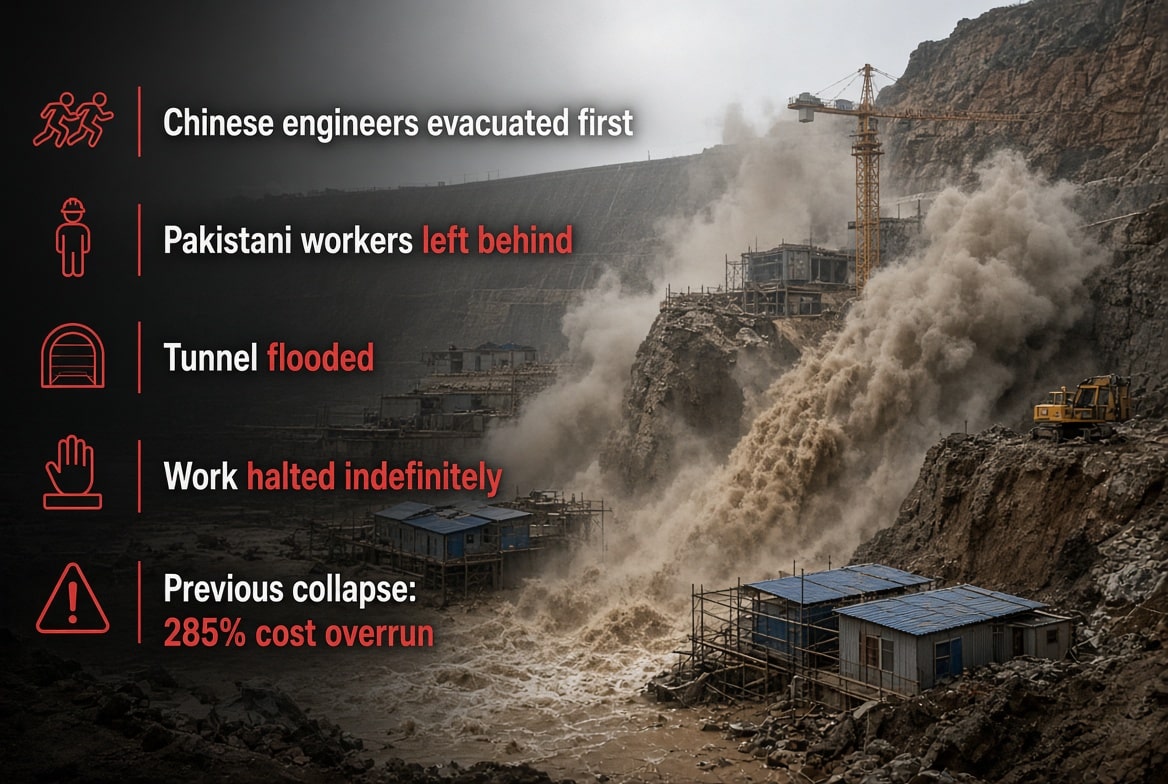
A safety embankment at the Tarbela Damdam’s under-construction T5 hydropower extension, built by China’s Power Construction Corporation of China Limited, breached on Monday during nearby excavation.
A collapsing rock mass tore open the protective structure around the Intake Pit, sending a surge of reservoir water flooding into Tunnel Five and the under-construction powerhouse area. Construction has been halted indefinitely.
Videos circulating from the site show massive clouds of dust and debris as water and soil cascaded through the work zone, engulfing temporary structures and equipment. Pakistani authorities, including Haripur Deputy Commissioner Waseem Ahmed, confirmed the breach flooded the tunnel. All workers were eventually moved to safety and no deaths were reported, though one Pakistani labourer was swept into the water and had to be rescued by emergency teams.
Reports from the site indicated Chinese engineers were prioritised for evacuation first, leaving Pakistani engineers and labourers behind amid the chaos.
This is the second major failure at the Chinese-contracted T5 project. An earlier cofferdam collapse in 2025 triggered a government inquiry that held all parties responsible—including the Chinese contractor—for unauthorised design changes, contractual breaches, and weak structures that ignored proper engineering standards. That incident alone delayed the project by years and ballooned costs from roughly Rs82 billion to Rs317 billion.
ritics note that such repeated failures reflect a pattern of poor-quality Chinese construction and mindless projects that prioritise speed and cost-cutting over safety and environmental stability in fragile terrain.
WAPDA has stated that the main tunnel, powerhouse structure, tailrace culvert and switchyard sustained no damage, and that water from the Intake Pit has been drained. Local officials have ordered a high-level inquiry into whether structural weakness or technical fault caused the latest breach. The T5 extension, financed partly by World Bank and Asian Infrastructure Investment Bank loans and intended to add 1,530 MW, continues to face mounting setbacks under Chinese execution.