

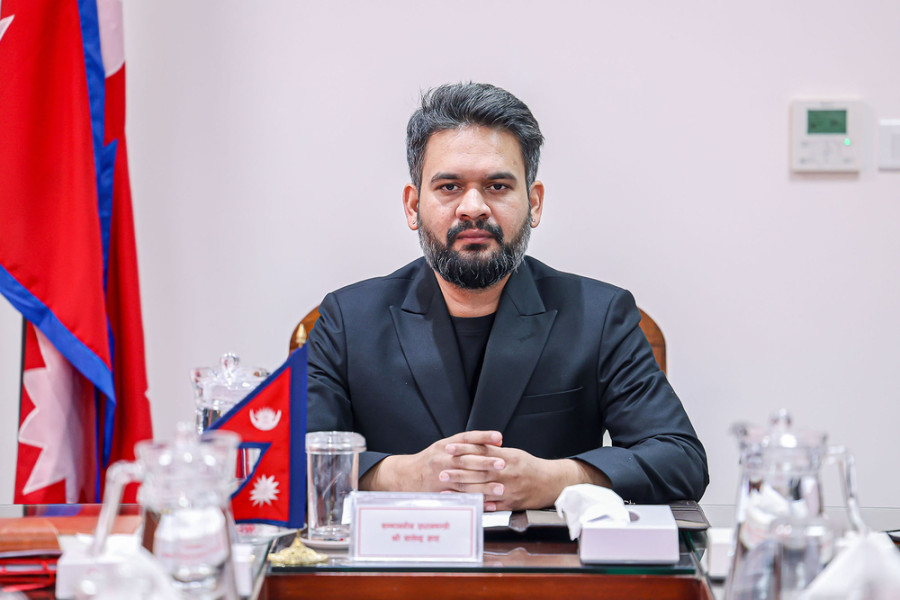
India has stated that Prime Minister Balendra Shah’s proposed visit to New Delhi will address the full spectrum of bilateral relations. Talks on the dates and logistics of the trip are ongoing.
Speaking at a regular media briefing on Tuesday, Indian Ministry of External Affairs spokesperson Randhir Jaiswal confirmed: “We have extended an invitation to the Prime Minister of Nepal to visit India. The discussions between the two sides are continuing regarding the visit.”
He described the relationship as an “expansive” and “very special partnership,” adding that “the entire range of bilateral relations that we have with Nepal will be discussed” and that “all matters of mutual interest would be discussed.”
The comments follow heightened diplomatic activity ahead of Shah’s first official bilateral visit to India since taking office in March. Indian Foreign Secretary Vikram Misri visited Kathmandu on November 4–5 at the invitation of his Nepali counterpart, Amrit Bahadur Rai. Misri held delegation-level talks with Rai, met Foreign Minister Shisir Khanal, Finance Minister Swarnim Wagle and other officials, and called on Shah, conveying an invitation from Prime Minister Narendra Modi.
During the meetings, the two sides reviewed possible outcomes and initiatives for the prime ministerial visit, covering trade, energy, hydropower, connectivity, development partnership and border management.
The visit is expected in the second half of November, with November 22–25 emerging as the probable window, though neither side has formally announced the itinerary.
Key issues likely to feature include Nepal’s request for around $2 billion in Indian assistance (concessional loans and grants) for reconstruction and rehabilitation after the devastating August 26 floods in the Bhotekoshi-Rasuwa corridor. Kathmandu is also pushing for additional air-entry routes to its international airports, progress on the long-delayed Pancheshwar Multipurpose Project, better trade and transit arrangements, and resolution of longstanding boundary disputes over Kalapani, Limpiyadhura and Susta.
Energy cooperation, cross-border transmission lines, hydropower development and the implementation of India-funded infrastructure projects are also expected to be discussed.
India is Nepal’s largest trading partner and a major development partner. The two countries share an open border and deep historical, cultural, economic and people-to-people ties spanning trade, security, water resources, energy, connectivity and development assistance.
Shah’s visit offers an opportunity for both governments to take stock of bilateral relations under Nepal’s new administration and identify ways to deepen cooperation.
In a separate response, Jaiswal said the extradition of former Bangladeshi prime minister Sheikh Hasina would be handled through legal procedures. “This is a legal matter, and it will be dealt with accordingly,” he stated. Hasina has been living in India since fleeing Bangladesh in August 2024 amid mass protests that toppled her government. Dhaka has sought her extradition.