


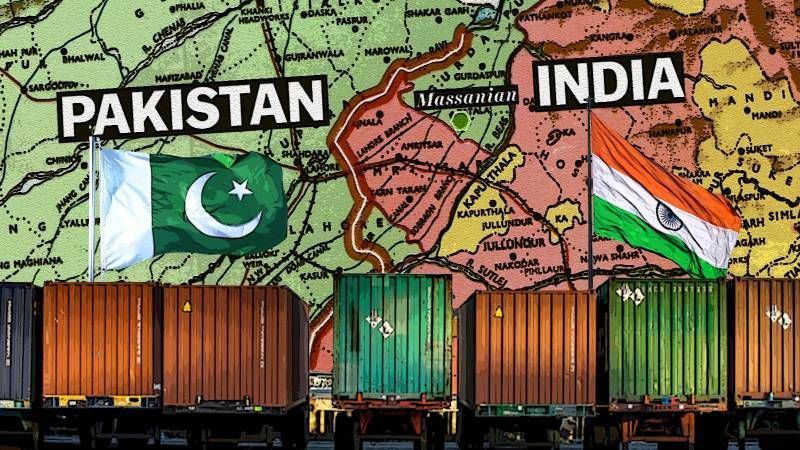
Pakistan’s payments for goods from India reached $61.7 million between July and September 2026, a 69 percent increase from the same period a year earlier, according to State Bank of Pakistan data.
Formal direct trade remains suspended following the April 2025 Pahalgam attack and subsequent military exchanges, yet commercial flows have recovered toward pre-conflict levels.
Organic chemicals and pharmaceutical products made up 96.2 percent of these imports in the 2025-26 fiscal year. Vaccines, blood products and related items were the largest category at $93.6 million (up from $70.3 million), with human-use vaccines rising sharply to $32.3 million.
A former Pakistani finance adviser noted that Indian active pharmaceutical ingredients remain attractive due to competitive pricing, availability and proximity, even as overall Indian goods represent only about 0.3 percent of Pakistan’s total $64.5 billion import bill.
Direct trade was restricted after India revoked Jammu and Kashmir’s special status in 2019, with further suspensions after the 2025 crisis.
Some Indian goods continue to enter via third-country hubs such as the UAE and Malaysia and are recorded by country of origin, according to a former Pakistani trade official.
Alternative sourcing could raise costs by 40-50 percent for some inputs. Analysts point to limited positive signals, including the recent release of fishermen and a handshake between football teams, but stress that any broader trade resumption depends on the security and political climate.