


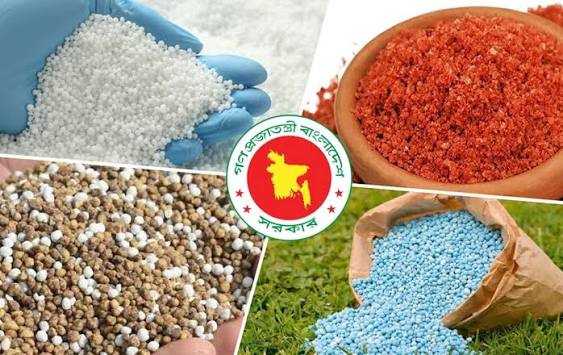
There is an adequate stock of fertilisers in the country to meet its demand during the Robi and Boro reasons, according to the Ministry of Agriculture.
“Fertiliser is being supplied across the country to meet farmers’ requirements for the Robi and Boro seasons,” a government handout said on Monday.
“There is an adequate stock of fertiliser. All concerned are requested not to be misled by any form of misinformation.”
Last week, the government approved separate proposals to procure a total of 295,000 tonnes of fertiliser, including urea, triple superphosphate (TSP) and diammonium phosphate (DAP), to meet the growing demand of such key agricultural inputs. Of the total quantity, 155,000 tonnes are urea, 80,000 tonnes DAP and 60,000 tonnes TSP.
On the other hand, the government has decided to set up three new fertiliser factories to raise domestic production capacity, cut import dependence, ensure a steadier supply for agriculture, and generate employment.
The Bangladesh Chemical Industries Corporation (BCIC) will implement the projects in Chattogram, Bhola, and Narsingdi.
BCIC aims to lift total fertiliser output to 2.7 million metric tonnes within the next three to five years. The corporation currently runs seven factories—five producing urea and two producing non-urea fertilisers.
In the 2025-26 fiscal year, national demand stands at 2.6 million metric tonnes of urea, 750,000 metric tonnes of TSP, and 1.485 million metric tonnes of diammonium phosphate (DAP). BCIC plants produced only 68,259 metric tonnes of TSP (9.10% of demand) and 82,142 metric tonnes of DAP (5.53% of demand), leaving the bulk of requirements to be met through imports.
The government currently provides subsidies of Tk 23,000 per metric tonne of urea, Tk 49,170 per metric tonne of TSP, and Tk 98,840 per metric tonne of DAP. Officials say the new factories, together with the modernisation and capacity expansion of existing plants, are intended to address these gaps.