


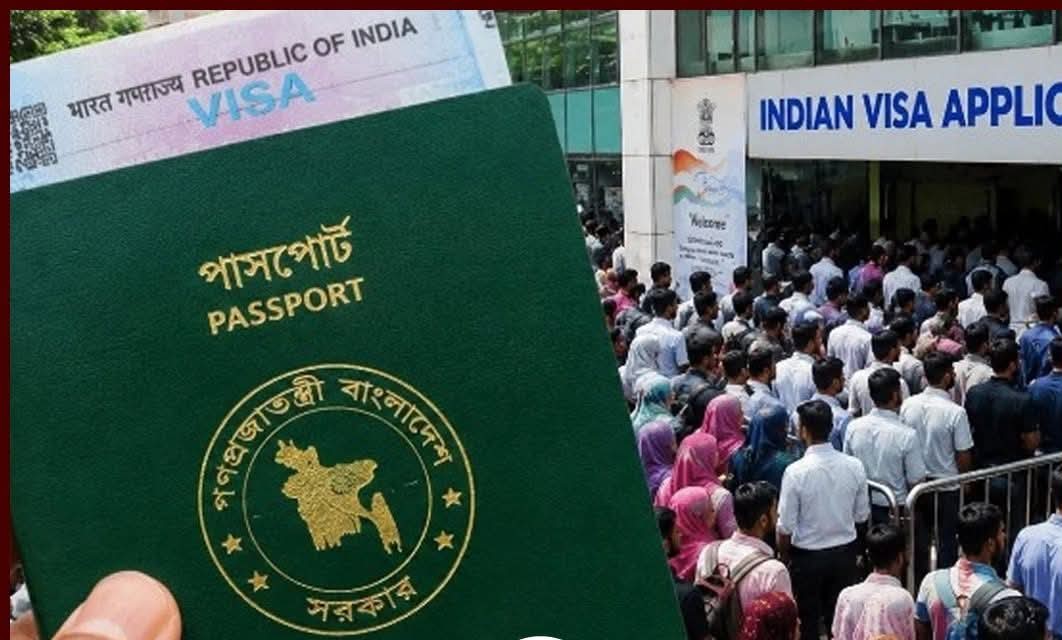
India’s Ministry of Home Affairs has overhauled its visa regime to make it simpler and less paperwork-heavy for foreign nationals.
Main visa categories have been cut from 13 to 9, and sub-categories from 49 to 23. Application forms will have 65–70% fewer fields across all remaining categories.
The decision was taken on 27 August 2026 and formally announced on 11 November. IT systems are currently being updated, and visas under the new structure are expected to be issued by the end of this year (from December onwards).
The nine main categories are now business, diplomatic, work, journalist, medical, official, student, visitor, and miscellaneous.
Similar-purpose visas have been merged so applicants can more easily pick the right category.
Key Changes for Bangladeshi Travelers
Bangladesh is one of the largest sources of visitors to India, especially for medical treatment, tourism, short business trips, family visits, and education. The reforms directly affect these groups:
Visitor Visa (replaces the old Tourist Visa)
This is the biggest practical change. The new Visitor Visa covers a wider range of activities beyond pure tourism.
- V-1: Valid for 30 days with multiple entries. It covers tourism plus short-term business meetings, medical consultations, wellness activities, short-duration medical treatment, and short courses in Indian languages, music, art, or craft.
- V-2: Available for 1, 5, or 10 years (depending on eligibility). It allows the same activities as V-1, plus mountaineering (for which a separate 6-month multiple-entry visa is available).
For many Bangladeshis who combine a short holiday or family visit with a medical consultation or business meeting, this offers more flexibility than the previous strictly separate categories.
Medical Visa
- M-1: For regular medical treatment (non-AYUSH).
- M-3: For treatment under AYUSH systems (Ayurveda, Yoga, Unani, etc.).
Both are generally issued for one year with multiple entries (including e-visa versions). Separate attendant visas (M-2 for M-1 patients and M-4 for M-3 patients) remain available.
This is particularly relevant for the large number of Bangladeshi patients who travel to hospitals in Kolkata, Delhi, Chennai, Bengaluru, and other cities and often need follow-up visits. The default one-year multiple-entry validity reduces the need for repeated applications.
Student Visa
- S-1: School, undergraduate, and postgraduate studies.
- S-2: Research, PhD, internships, teaching, academic exchanges, and similar activities.
Business Visa
- B-1: Long-term investment and setting up businesses in India.
- B-2: Short-term contracts, conferences, and other business activities.
The Ministry of Home Affairs says the changes aim to make the system more compact and responsive, reducing confusion and speeding up applications for tourism, medical travel, studies, and business.
For Bangladeshi applicants, the combination of fewer form fields, clearer categories, and more flexible Visitor and Medical visas should make the process noticeably simpler once the new system goes live in December.