


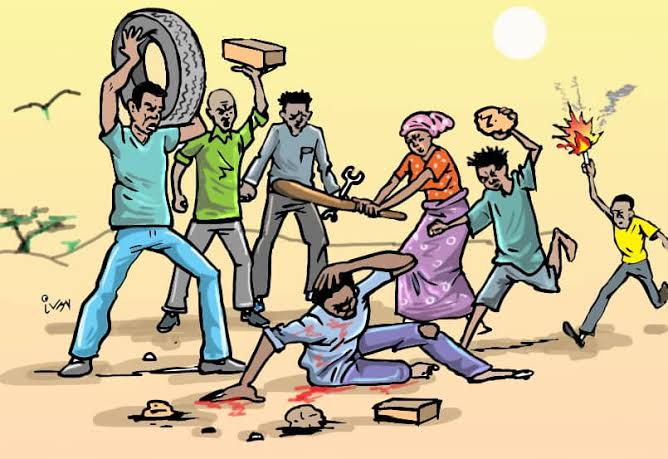
The tendency to take the law into one’s own hands and the scale of extrajudicial violence in the country have increased at an alarming rate. The October monitoring report published by the Manobadhikar Songskriti Foundation (MSF) paints a deeply disturbing picture of the overall law-and-order situation.
According to the report, at least 64 incidents of mob beating (gongopituni) occurred across the country in October. In these incidents, 32 people were killed and another 54 were injured.
The organisation’s statistics show that 23 people were killed in mob beatings in the previous month (September). In just one month, the number of deaths rose by 9, or 39.13 per cent, in October.
The number of people injured in mob beatings in October fell somewhat to 54 (compared with 74 in September). Human rights analysts, however, stress that the drop in injuries cannot be viewed as any sign of reduced violence. On the contrary, the figures clearly indicate that mob beatings have become more aggressive, brutal and directly lethal, so that fewer people now survive such attacks.
An analysis of the background of the 64 mob-beating incidents in October shows that a large share of the violence stemmed from mere suspicion of ordinary theft. Fourteen people lost their lives in organised attacks based solely on theft allegations. In Rangpur alone, three people were beaten to death on suspicion of stealing an auto-rickshaw and cattle. Similar horrific beatings to death on the same type of allegation occurred in Tongi, Noakhali and Chattogram.
Five more people died as a result of ordinary social disputes and quarrels. Another 11 people were killed in mob beatings linked to extortion, land-related conflicts and various other accusations.
The report states that this culture of people banding together to beat ordinary citizens to death over trivial suspicions of theft, family or social disputes, or land conflicts is a manifestation of social decay. Human rights activists have strongly demanded strict social and administrative measures to stop the illegal practice of “trying” people in the open streets instead of handing them over to the law, regardless of who the alleged offender may be.
Added Concerns
These figures raise serious concerns about the rapid erosion of the rule of law and the growing normalisation of extrajudicial violence. A nearly 40 per cent month-on-month rise in deaths from mob beatings, even while injuries decline, suggests that attacks are becoming more lethal rather than less frequent—an especially worrying trend.
When people are killed over mere suspicion of minor theft or everyday disputes, it signals a profound breakdown in public trust in formal justice institutions and a dangerous culture of impunity.
Without immediate and firm intervention by the authorities, community leaders and civil society, this pattern risks further undermining social cohesion, human rights protections and the basic guarantee that disputes will be resolved through lawful means rather than collective violence.