


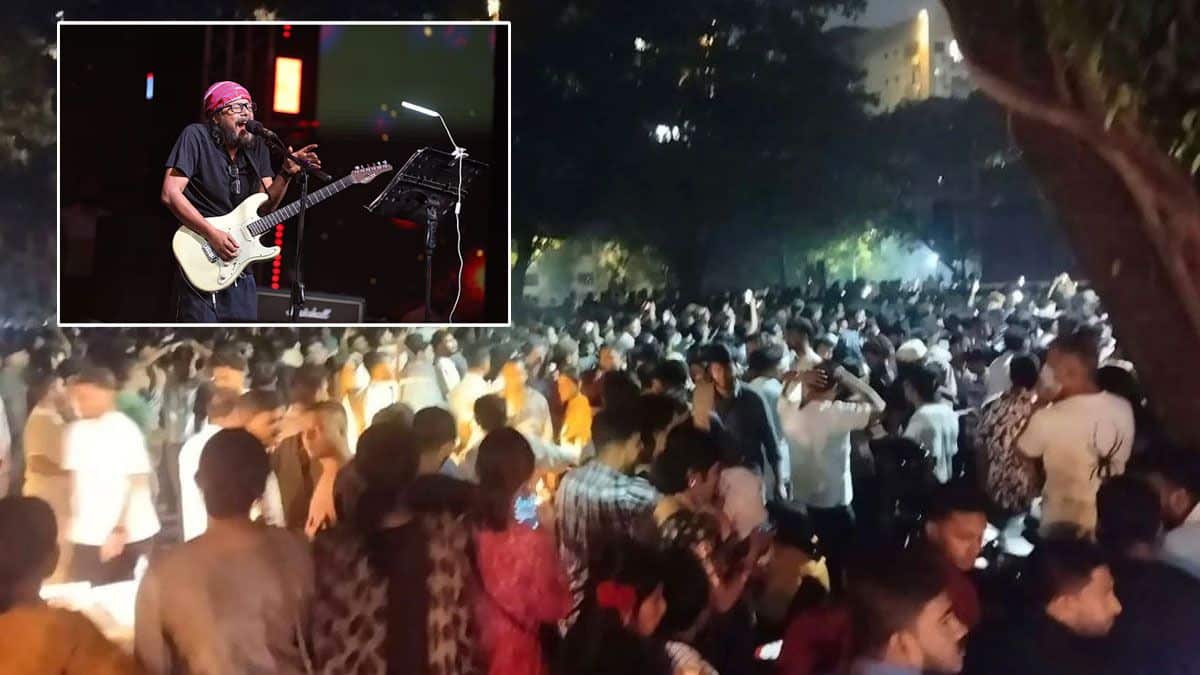
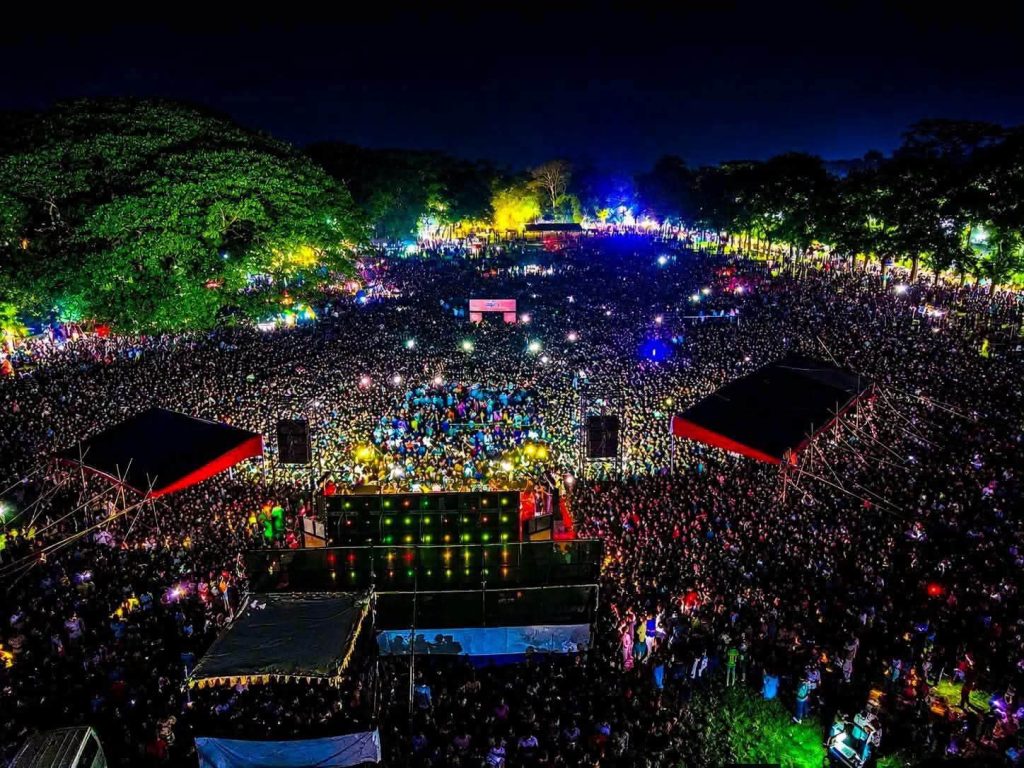
On Saturday, 7 November 2026, a free open-air event titled “Concert for Solidarity” was held at Manik Mia Avenue in Dhaka to mark National Revolution and Solidarity Day (commemorating the 1975 soldiers-and-people uprising associated with Ziaur Rahman).
Organised by the Ministry of Cultural Affairs and managed by Bangladesh Shilpakala Academy (with support from the Bangladesh Musical Bands Association), the seven-hour concert featured popular bands including Nagar Baul (James), Miles, Warfaze, Feedback, Artcell, Shironamhin and Mechanics. Entry was open to all, and large crowds attended.
Nagar Baul’s James performed, including a version of “Amar Sonar Bangla” that contained lines referencing both Bangabandhu Sheikh Mujibur Rahman (“You are the fiery speech ignited by Bangabandhu’s blood…”) and Shaheed Ziaur Rahman (“…you are the dream of Shaheed Zia mixed with rice ears…”).
The inclusion of Bangabandhu’s name in a song at a BNP-government-organised event on a day traditionally linked to Zia sparked discussion on social media. Some viewed it as a sign of a more democratic approach under the current BNP administration.
This comes against the backdrop of intense anti-Awami League sentiment and campaigns that began with the July–August 2024 student-led uprising. The protests forced then-Prime Minister Sheikh Hasina (Awami League) to flee to India on 5 August 2024.
An interim government under Muhammad Yunus followed; the Awami League’s student wing (Bangladesh Chhatra League) was later banned under anti-terrorism laws, and the party itself faced a temporary ban on activities pending International Crimes Tribunal proceedings related to the 2024 crackdown.
Elections in February 2026 brought the Bangladesh Nationalist Party (BNP) to power under Prime Minister Tarique Rahman. Anti-AL actions have continued under both the interim and elected governments, including arrests of alleged supporters, restrictions on the party, and rhetoric portraying the ousted regime as a threat to independence and sovereignty. The Awami League remains largely sidelined, with many leaders in exile or facing cases.
On Sunday, 8 November, at a discussion on National Revolution and Solidarity Day organised by the central unit of Bangladesh Jatiyatabadi Chhatra Dal (BNP’s student wing) at the TSC auditorium of Dhaka University, Chhatra Dal president Rakibul Islam Rakib addressed the concert issue. He noted that for the previous 15 years under Awami League rule, the party’s student wing (Chhatra League) had repeatedly forced James to omit the Shaheed Ziaur Rahman portions when performing “Amar Sonar Bangla.”
In contrast, at yesterday’s concert under the BNP government, organisers did not compel him to drop the Sheikh Mujib section. Rakib said this was because “they want everyone to receive the respect they are due.”
He added that the Awami League had repeatedly endangered the country’s independence and sovereignty, and that even after fleeing, its leaders continued anti-national conspiracies. Should Bangladesh face any crisis, Chhatra Dal would be the first to take to the streets to thwart such plots. The chief guest was BNP acting secretary general and Prime Minister’s political adviser Ruhul Kabir Rizvi Ahmed.
he programme was moderated by Chhatra Dal general secretary Nasir Uddin Nasir, with other speakers including organisational secretary Amanullah Aman and senior joint general secretary Shyamal Malum.
Rakib also recalled that Chhatra Dal and others had been unable to freely celebrate 7 November for 15 years under the previous government, but the day was now being observed spontaneously nationwide as a historic occasion when soldiers and the people protected independence and sovereignty.
The episode highlights the ongoing political recalibration after the 2024 ouster of the Awami League: public and official narratives continue to emphasise resistance to the former ruling party, while the new BNP government navigates cultural and symbolic spaces that once heavily featured Bangabandhu-centric iconography.