


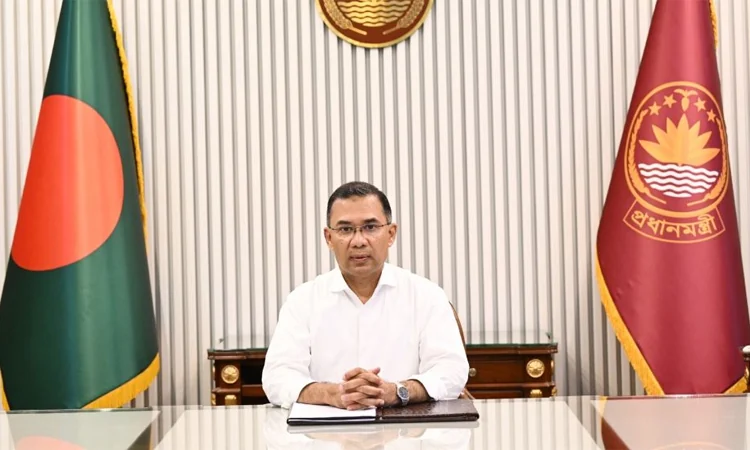
Jordan’s Royal Islamic Strategic Studies Centre (RISSC) has published its latest list of the world’s 500 most influential Muslims. Bangladesh’s Prime Minister and BNP Chairman Tarique Rahman appears on the list in the “Political” category of The Muslim 500.
In the national parliamentary election held on 12 February 2026, the Bangladesh Nationalist Party (BNP) led by Tarique Rahman secured a two-thirds majority and returned to power. He assumed office as prime minister after the interim government ended its term. His inclusion recognises his role in the country’s political and administrative leadership as head of the new government.
Also listed is Dr. Hamida Hossain, the well-known Bangladeshi human rights activist, researcher, and co-founder of Ain o Salish Kendra (ASK). She appears regularly on the list for her long-standing work on women’s rights and democratic values.
Nobel Peace laureate and former managing director of Grameen Bank, Dr. Muhammad Yunus, was also included among the top Muslim leaders two times while serving as chief adviser of the interim government.
The publication states that the list is compiled according to the capacity to exert political, ideological, cultural, and financial influence over roughly 2.2 billion Muslims worldwide. Only the top 50 figures are ranked from 1 to 50; the remaining 450 are unranked and placed in 13 categories covering politics, theology, social service, business, science, culture, and related fields. The three Bangladeshis selected this year all appear in the unranked group of 450.
Security, extremism and political history
Banned militant groups and radical Islamists have enjoyed complete impunity since Dr. Muhammad Yunus assumed power in August 2024. Instead of cracking down on extremism, armed attacks, or open motivation for armed jihad linked to Arakan, India, Afghanistan, and Palestine, the Yunus-led interim administration and the subsequent BNP government have promoted many of these figures as Islamic scholars and released most jailed militants.
Militants who escaped prisons during the 2024 anti-government movement have still not been rearrested.
The previous BNP government (2001–06) was widely accused of patronising banned militant outfits such as Jama’atul Mujahideen Bangladesh (JMB) and Harkat-ul-Jihad al-Islami Bangladesh (HuJI-B). BNP’s long-time ally Jamaat-e-Islami and its student wing Shibir have been linked to JMB, Hizb ut-Tahrir, the al-Qaeda in the Indian Subcontinent (AQIS) affiliate Ansar al-Islam, and Jama’atul Ansar Fil Hindal Sharqiya.
Tarique Rahman’s father, former president General Ziaur Rahman, pursued a pro-Islamist foreign policy after 1975, lifted the ban on religion-based politics, allowed the war-crimes-accused Jamaat-e-Islami to re-enter formal politics, and extended patronage to radical Islamist groups and spiritual leaders until his assassination in 1981.
His widow, Begum Khaleda Zia, continued this approach during her tenures as Prime Minister (1991–96 and 2001–06) and in the years that followed (2009–2025), maintaining close ties with Jamaat and other Islamist networks.
Under Tarique Rahman’s current government, Bangladesh has seen a sharp rise in extremist activity. This is reflected in successive raids on militant dens, large-scale recoveries of explosives and weapons, heightened radical mobilisation on social media against non-Muslims, secularism, ami League and Indian government, kalema flag campaign, moral policing against women, and the open operation of vigilante groups such as Touhidi Janata, which have carried out lynchings of people accused of blasphemy.
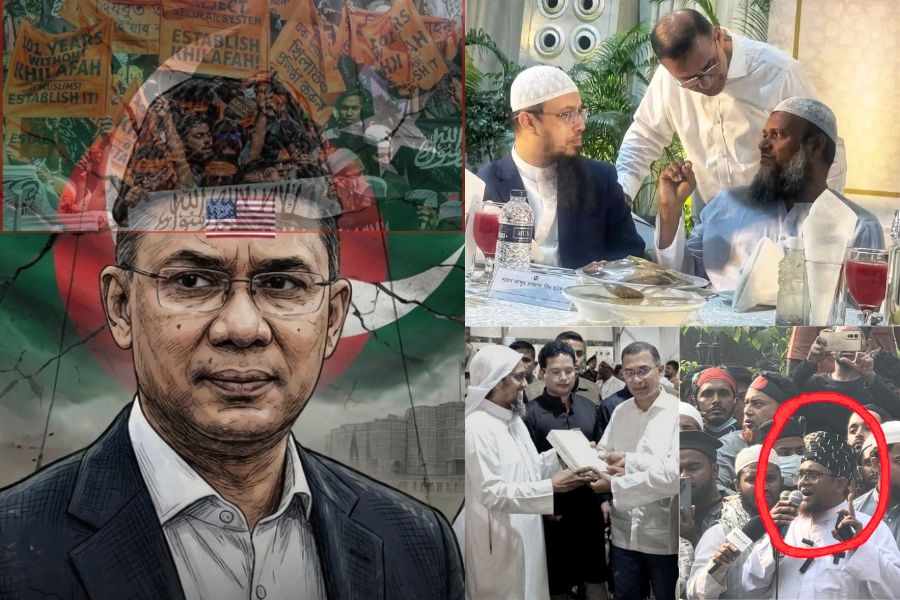
Experts say the frequent meetings of radical Islamist preachers with the president, prime minister and senior ministers and pro-Islamist policies of the government are hampering peace and stability of the country and the region.