


Union Minister Kiren Rijiju launched a sharp attack on the Congress after the Indian Army debunked digitally manipulated videos circulated by a party leader alleging Chinese incursions into Indian territory and Chinese control over parts of Arunachal Pradesh. The controversy has intensified criticism of the opposition party over the circulation of unverified claims concerning national security and India’s territorial integrity.
One of the posts, shared by Ritu Choudhary, a Congress spokesperson from Bihar, claimed that Chinese vehicles had entered Indian territory. Another video alleged that China had taken control of Asaphila, Longju and Taksing Circle in Arunachal Pradesh and that Indian Army personnel deployed in the region were being denied essential supplies.
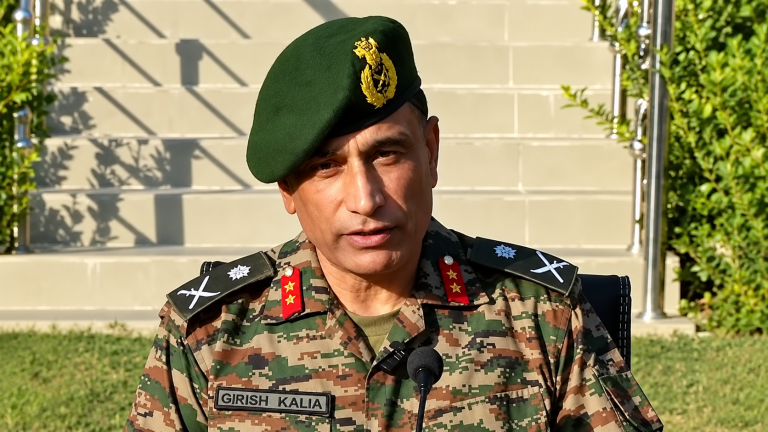
The Indian Army categorically rejected the allegations, identifying the video concerning Arunachal Pradesh as digitally manipulated content that used artificial intelligence-generated lip-syncing and voice cloning to fabricate remarks attributed to Lieutenant General Girish Kalia, General Officer Commanding of Spear Corps (3 Corps).
The Army’s official fact-checking handle, Indian Army Fact Check (@MythbusterXX), clarified that the video falsely portrayed the senior officer as admitting to Chinese territorial gains and supply shortages affecting Indian troops. It warned that fabricated statements were being presented as a leaked admission to mislead the public and create unnecessary alarm.
The Army further explained that the original footage dated to October 27, 2023, when Kalia, then a Major General and GOC of the 28 Infantry Division, addressed the media in Kupwara, Jammu and Kashmir. His briefing concerned counter-terrorism operations and infiltration attempts along the Line of Control, with no reference to Chinese control over Arunachal Pradesh or restrictions on supplies to Indian troops.
The clarification has put the spotlight on the responsibility of political leaders when sharing claims involving the armed forces and sensitive border areas. Rijiju’s criticism of the Congress comes amid continuing political disputes over the government’s handling of China and border security.
The circulation of such allegations, particularly when they are presented as revelations about territorial losses or the alleged abandonment of soldiers, risks undermining public confidence in national security institutions. The episode has also renewed concerns that sensational claims can be used to damage the government’s credibility before being independently verified.
While the opposition has a legitimate role in questioning government policy and demanding accountability, claims of Chinese occupation and shortages affecting deployed troops require credible evidence. Sharing manipulated footage as genuine military testimony risks turning serious national security issues into instruments of political confrontation.
The Army’s fact-check establishes that the Arunachal Pradesh video was digitally altered and that the statements attributed to Lt Gen Kalia were fabricated. Any further allegations concerning the origins or coordination of the material, however, must be supported by evidence.
The controversy has sharpened the debate over whether the circulation of misleading claims by political figures can contribute to attempts to discredit the government on national security. It also underscores the need for public representatives to verify material before sharing it, especially when it concerns India’s territorial integrity and the operational position of the armed forces.
As political parties continue to clash over China policy, the episode serves as a reminder that misinformation about border security can have consequences far beyond party politics. Protecting public trust requires both rigorous scrutiny of government actions and equal responsibility in ensuring that claims made in the name of national security are factual and verifiable.