


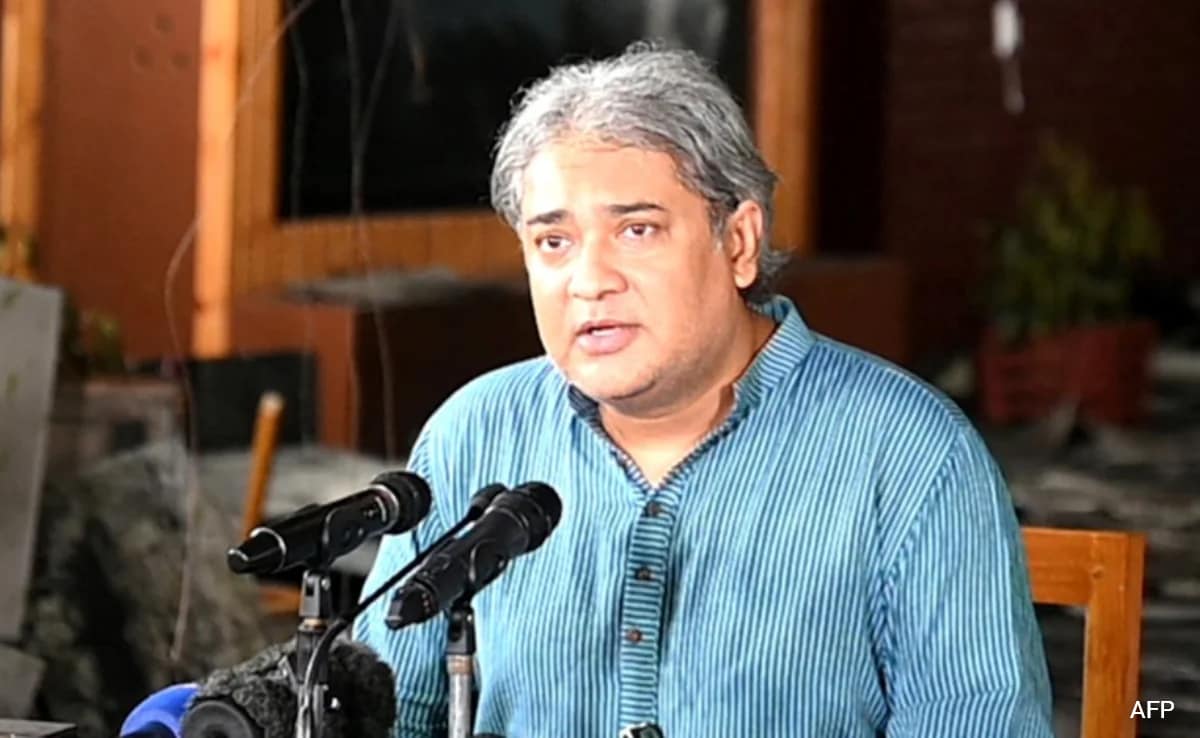
Former Awami League State Minister for Information and Broadcasting Mohammad Ali Arafat has described the situation in Bangladesh as “deeply alarming” and likely to take “an even more destructive turn.”
In an English-language post on X on Saturday, he attributed the crisis to what he called a “politics of exclusion,” in which “everything is being done unilaterally by a single group of people.”
Arafat, who served in Sheikh Hasina’s cabinet until her resignation on 5 August 2024 and has since lived in self-imposed exile, framed the country’s politics as divided into two camps. One, he wrote, consists of “liberal, centre-left, secular, progressive and democratic forces, led by the Awami League and its 14-party alliance.” The other comprises “centre-right, radical Islamist and religious extremist forces, led by the BNP and Jamaat-e-Islami and their respective alliances.”
He criticised the February 2026 parliamentary election as “one-sided,” noting that the Awami League—one of the country’s largest parties—and its alliance partners were excluded. The interim government led by Muhammad Yunus had banned the party’s activities in May 2025 under the Anti-Terrorism Act, pending proceedings before the International Crimes Tribunal; the Election Commission subsequently barred it from contesting.
The Bangladesh Nationalist Party (BNP), under Tarique Rahman, secured a majority and formed the government, with Rahman sworn in as Prime Minister in mid-February 2026.
In the post, Arafat alleged that law-enforcement agencies have “selectively misusing the law against opposition leaders and activists for little more than the past two years.” He claimed that on numerous occasions BNP-Jamaat supporters have acted “like mobs, attacking political opponents,” yet police have arrested the victims and filed cases against them rather than the perpetrators.
He further accused the judiciary of playing “a blatantly one-sided role, acting subserviently to the BNP and Jamaat.” According to Arafat, after 5 August 2024 “all judges and justices were unlawfully removed from their positions in the judiciary, and only individuals loyal to the BNP and Jamaat were appointed in their place,” with loyalists placed “across virtually every institution.” He acknowledged that some politicisation has long existed in Bangladesh but said the current authorities “have shamelessly crossed every conceivable limit.”
Arafat wrote that he has at times “rather naively” suggested that establishing the rule of law and holding a free, fair and inclusive election would allow the situation to settle. While true in principle, he argued, this is impossible under present circumstances. A free and inclusive election, he claimed, would see “the majority of the people in the country vote for the Awami League and bring it back to power.” Likewise, genuine rule of law would require both Yunus and Tarique Rahman to go to prison.
He referred to earlier labour-law cases against Yunus that he said had been “proven in court,” asserting they would stand in any impartial process worldwide. On Rahman, he cited the 21 August 2004 grenade attack that killed more than 24 people and injured over 500, in which Rahman was previously convicted, as well as money-laundering allegations in which an FBI investigator had testified. These, too, he said, would be proven beyond reasonable doubt in any neutral court.
Higher courts in Bangladesh have since overturned or stayed several of those earlier outcomes. Yunus was acquitted in labour-law matters by appellate bodies in 2024, with the Supreme Court upholding the quashing of related cases. Rahman and co-accused were acquitted by the High Court in the grenade-attack cases in December 2024; the Appellate Division later upheld the acquittal. Similar relief was granted in the money-laundering case.
Arafat concluded that “since 8 August 2024, this country has been governed, first by Yunus and now by Tarique, two convicted criminals.” He therefore advised that “no one should expect democracy or the rule of law in Bangladesh under the present circumstances” and that people would have to “fight to secure their own rights and the rights of the wider population.”
The statement aligns with the Awami League’s position from exile that the post-2024 order lacks inclusivity. Arafat himself faces an arrest warrant from the International Crimes Tribunal linked to the 2024 unrest, which he has previously called a “political show trial.”
The Awami League remains banned, and some government figures have recently spoken of possible constitutional measures to make the restriction permanent. No immediate official response to this specific post had been reported.