

By Probir Kumar Sarker A widely shared Facebook Reel has been circulating among political observers this week, capturing the energy and determination of ordinary citizens and party workers who continue to stand with the BJP’s (Bharatiya Janata Party) vision for a stronger, more self-reliant India.
The short video reflects the ground-level confidence that has defined the NDA’s third term: scenes of organized support, national flags, and clear messaging around governance, security, and opportunity rather than the chaos being amplified by sections of the opposition and certain international commentary.
While specific visual details of every circulating clip vary, the broader conversation the video feeds into is unmistakable. India in late 2026 remains under the steady leadership of Prime Minister Narendra Modi and the NDA, which secured a third consecutive term in 2024 and has since delivered clear electoral reinforcement in key states.
The BJP’s decisive breakthrough in West Bengal earlier this year (securing a commanding majority) and its consolidation in Assam demonstrated that the party’s organizational depth and message of development-plus-cultural confidence continue to resonate beyond its traditional strongholds.
Current Political Landscape: Progress Over Protest
The opposition, led by the Congress and elements of the INDIA bloc, has focused its energy on protests in Delhi and elsewhere over the Election Commission’s Special Intensive Revision of electoral rolls. Claims of mass deletions (sometimes cited in the tens or even over a hundred million) have been used to allege bias. In reality, the exercise is a long-overdue cleanup of outdated and inflated rolls—removing duplicates, deceased voters, and ineligible entries so that the democratic process rests on accurate data.
Similar revisions have occurred under previous governments; the difference now is the political noise surrounding them.
Youth-led groups and opposition parties have staged demonstrations, but these remain largely confined to urban pockets and have not altered the broader public assessment of governance.
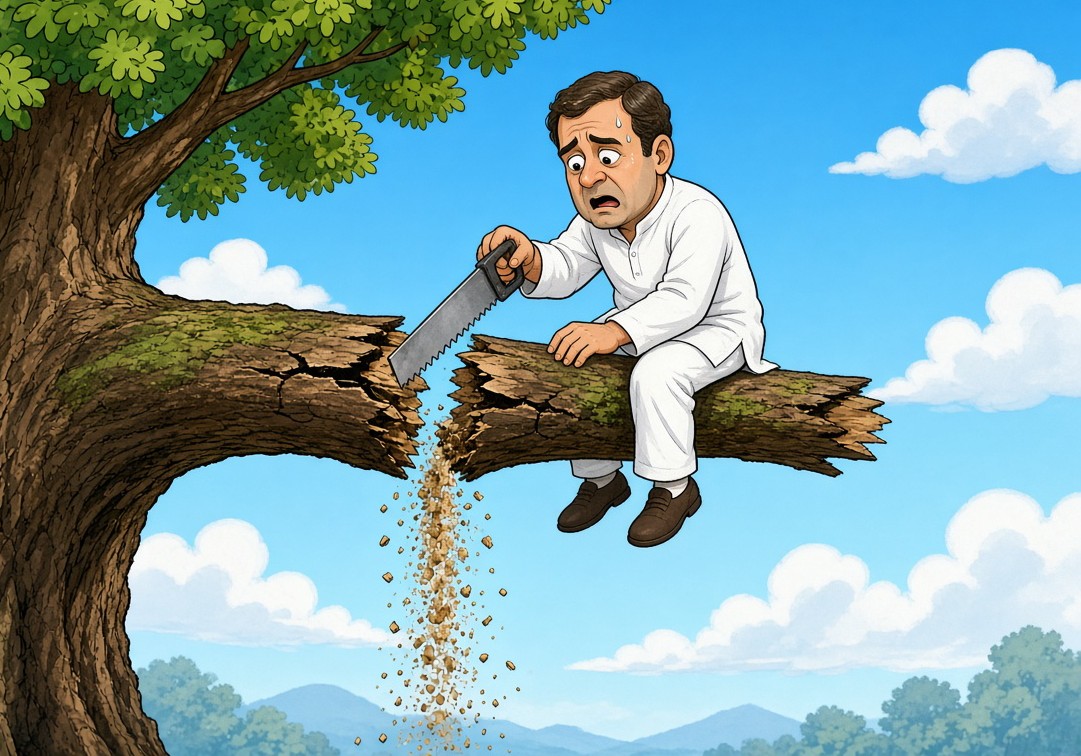
BJP leaders have correctly pointed out that opposition figures, including Rahul Gandhi, continue to make statements that play into external narratives rather than strengthening India’s position. Recent remarks at international forums have drawn sharp but factual rebuttals from the party, underscoring that foreign policy under the NDA prioritizes strategic autonomy, Indo-Pacific partnerships (including the Quad), and national interest over outdated “side-player” tropes.
On the legislative front, the government is preparing to advance the long-pending delimitation process and the linked women’s reservation provisions. After the Constitution (131st Amendment) Bill fell short of a special majority in April 2026, renewed discussions around a special session or the Winter Session reflect a determination to expand the Lok Sabha (potentially toward an 850-seat ceiling) and ensure one-third reservation for women is implemented before the 2029 elections.
Population-based redrawing of constituencies is a constitutional necessity after the freeze ends with the next Census. While some southern parties raise federal concerns, the principle of equal representation based on current population is consistent with democratic fairness. The NDA, with roughly 320 members in the Lok Sabha and strengthened numbers in the Rajya Sabha, continues to build the arithmetic required while emphasizing consultation.
Why the BJP Narrative Prevails
Independent assessments and party-aligned polling continue to show solid support for the NDA’s record: infrastructure expansion, digital public goods, energy security, and a foreign policy that has elevated India’s global standing. The 2026 state results reinforced that voters reward delivery over disruption. Opposition unity remains fragile—regional parties have their own calculations, and attempts to paint routine administrative processes as existential threats to democracy have limited traction outside activist circles.
International pieces suggesting “the beginning of the end” for the current government recycle familiar tropes that have accompanied every phase of the NDA’s tenure since 2014. Ground realities—electoral outcomes, continued investment, and the absence of any viable national alternative—tell a different story. The BJP’s organizational machinery, ideological clarity on issues of national identity and security, and focus on last-mile delivery have repeatedly confounded predictions of decline.
As Parliament prepares for the Winter Session and the next round of state contests approaches (including the critical Uttar Pradesh cycle in 2027), the governing coalition’s priority remains clear: complete the work of modernizing India’s electoral architecture, expand opportunities for women in politics, and keep the focus on growth and stability.
Videos and ground reports like the one circulating on Facebook serve as a useful reminder that the political energy in large parts of the country is still oriented toward constructive governance rather than perpetual protest.
The coming months will test parliamentary arithmetic on delimitation, but the larger trajectory of Indian politics under the NDA remains one of continuity and expanding reach. For supporters and observers alike, the message from the ground is consistent: the work of building a developed India continues.