


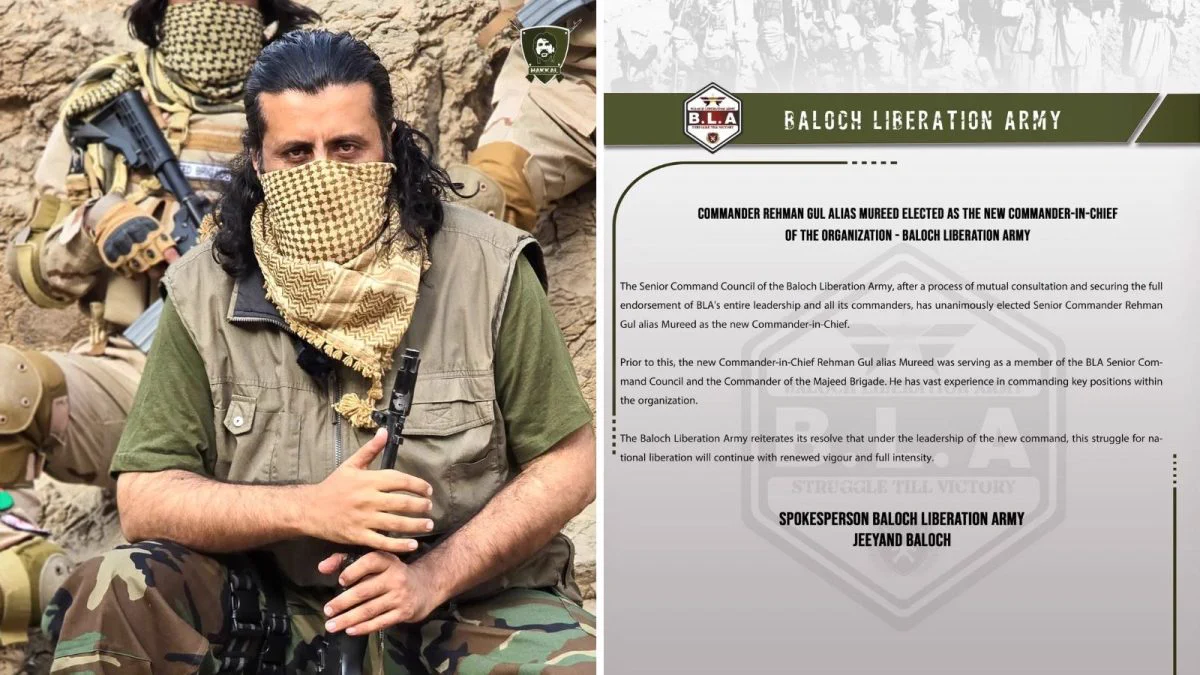
The Baloch Liberation Army (BLA) has appointed Rehman Gul, also known as Mureed or Ustad Mureed, as its new commander-in-chief. The announcement came on November 14, 2026, from spokesperson Jeeyand Baloch.
The Senior Command Council selected Gul unanimously after internal consultations, with full endorsement from the group’s leadership and commanders.
He succeeds Bashir Zeb Baloch, whose departure was announced on November 3, with administrative, military, and policymaking powers temporarily transferred to the Senior Command Council.
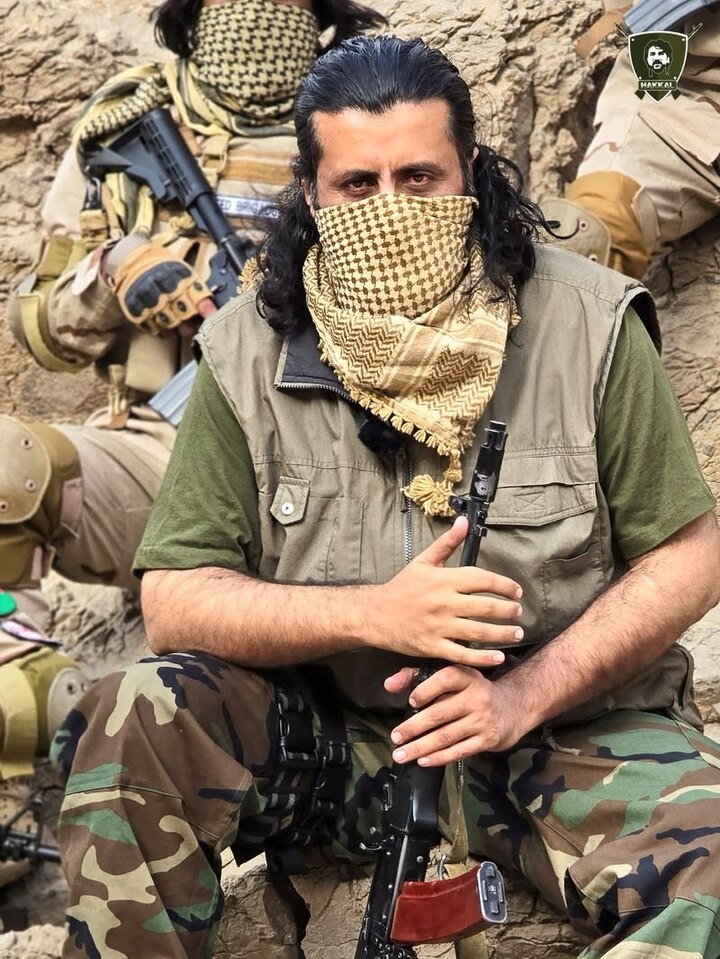
Gul’s background is distinctive. Born on August 14, 1984, in Nushki, Balochistan, to Mir Afzal Khan (or Mir Muhammad Afzal) Mengal and Meena Mengal, he belongs to the Zagar Mengal family.
His family has deep ties to Baloch nationalist politics and resistance: his maternal connections link him to Lawang Khan Mengal, a prominent guerrilla commander in the 1970s, and to Gul Khan Naseer, the renowned Baloch poet, historian, and former provincial education minister.
His father has been active in local politics, including as a counselor and independent candidate. One brother is a serving Pakistan Army officer, while another has been linked to BLA activities.
Gul joined the Pakistan Army in 2002 through the 109th Long Course of the Pakistan Military Academy at Kakul. He served approximately eight years with the 19 Frontier Force Regiment (also known as Piffer Tiger).
His postings included operations against the Tehreek-e-Taliban Pakistan (TTP) in North and South Waziristan (areas such as Miranshah, Ladha, and Karama) and along the Line of Control in the Kotli/Khuiratta sector of Pakistan-occupied Jammu and Kashmir.
He rose from second lieutenant to captain and held roles including platoon and company commander. He left the army around 2010 after a period of growing disillusionment—reportedly influenced by incidents he witnessed, the deaths of Baloch leaders such as Nawab Akbar Bugti and Balach Marri, and broader questions about state policies toward Balochistan—and joined the BLA in the Bolan region under Aslam Baloch.
Upon joining, Gul began with basic organizational duties (including “langri” work such as cooking and camp chores) before advancing as a trainer of recruits, field commander in areas including Kharan and Kalat, member of the Senior Command Council, and commander of the Majeed Brigade—the BLA’s specialized suicide-attack unit. He is also known as a Brahui-language poet who has written books of poetry and articles praising fighters and the struggle. Pakistani security agencies have long listed him, including on red books and with bounties, and he has been named in cases linked to high-profile attacks targeting Chinese personnel and projects, such as the 2022 Karachi University Confucius Institute bombing and the October 2024 attack near Karachi airport on a Chinese convoy.
The leadership change followed principles the BLA attributes to its 2018 restructuring under Aslam Baloch (killed in a suicide attack in Kandahar in December 2018). The group stated that no commander can hold the top post for life, that the transition was peaceful and constitutional, and that it marked the first such orderly succession in a Baloch armed organization. It pledged that the “struggle for national liberation will continue with renewed vigour and full intensity.” Bashir Zeb Baloch, also from Nushki and a former chairman of the Baloch Students Organisation-Azad (BSO-Azad), had taken over after Aslam Baloch’s death.
Independent analyses, including from the Pakistan Institute for Conflict and Security Studies (PICSS), indicate deeper internal tensions. Disagreements reportedly centered on Operation Herof 2 (launched late January/early February 2026), a coordinated BLA offensive that drew heavy Pakistani retaliation and significant fighter losses.
Gul is said to have criticized large-scale, high-visibility operations that exposed substantial manpower and favored smaller, mobile guerrilla units to preserve trained cadres. Sources suggest Zeb had been effectively sidelined from key decisions months earlier.
The appointment elevates a figure with formal military training, long operational experience, and direct control of the Majeed Brigade at a time of ongoing violence in Balochistan—where the province has accounted for a large share of Pakistan’s violence-related deaths—and continued targeting of security forces and Chinese-linked infrastructure under the China-Pakistan Economic Corridor.
Gul’s elevation brings insider knowledge of Pakistani military tactics and command structures to the BLA’s leadership, while reinforcing the prominence of Nushki-origin commanders and the Majeed Brigade’s role in the group’s strategy. The organization has framed the change as strengthening institutional continuity over individual leadership.