


A fresh debate has begun over the International Crimes Tribunal’s verdict against former Prime Minister Sheikh Hasina and the question of her return to Bangladesh. The Law Minister has stated that bringing her back now depends on India’s decision. According to him, the legal process for extradition is complete, and if she is returned, she will be handed over for the execution of her sentence. His remarks have also been interpreted as suggesting that she no longer has any right to appeal.
However, Professor Dr. S.M. Masum Billah of the Department of Law at Jagannath University has raised several questions: whether the window for appeal has truly closed, how the appeal period should be calculated in a trial conducted in absentia, and whether the proceedings met required legal standards.
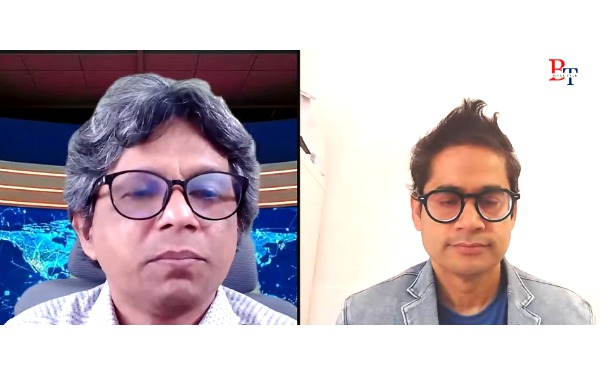
Speaking on a special episode of “Bipul Talk” on YouTube, Professor Billah (a visiting fellow at France’s Court de Jure University and a professor at Jagannath University) argued that the Law Minister has no authority to declare that there is no right of appeal. Only the courts can make that determination.
The Right of Appeal Belongs to the Courts
At the start of the discussion, host Nizamul Haque Bipul noted that Sheikh Hasina wants to return to Bangladesh but cannot do so voluntarily; she would have to return through extradition. India has not completely ruled out extradition so far. India’s position has been that she is present there as a guest and was not an accused in any case when she left Bangladesh.
Bipul pointed out that she was still Prime Minister when she left the country and faced no such charges at the time. The circumstances of her departure and the current demand for her return are therefore not the same.
The Law Minister has recently said that the ball is now in India’s court and that all legal processes are over, leaving no scope for appeal. Bipul asked whether this is factually correct or whether the minister is taking a premature position.
Professor Billah responded that the Law Minister cannot declare that there is no right of appeal. The courts alone have the jurisdiction to decide. A person’s legal remedies cannot be shut down in advance. He cited Article 27 of the Constitution, which guarantees equality before the law and the right to seek legal protection. Whether Sheikh Hasina can appeal is a matter for the court to decide. The government, he said, must create conditions that allow her to exercise her legal rights.
The 30-Day Limit Under the 1973 Act
Under Section 21 of the International Crimes (Tribunals) Act, 1973 (as amended in 2012), an appeal against a verdict must be filed within 30 days. Professor Billah questioned how this period should be calculated in a trial held in absentia.
In ordinary cases, the accused is present, participates in the proceedings, is informed of the verdict, and receives a copy of the judgment. In Sheikh Hasina’s case, the trial took place in her absence. He noted that international standards for in-absentia trials require proper notice, confirmation that the accused voluntarily waived the right to participate, and the opportunity for effective representation by a lawyer of one’s own choice. Simply publishing notices in two newspapers does not automatically satisfy the standard of effective notice.
He added that Sheikh Hasina has publicly stated she wants to face the legal process and has not declared that she is voluntarily refusing to participate. Therefore, treating her absence as a deliberate attempt to evade justice is open to question.
Right to Counsel of Choice and Other Standards
Article 33 of the Constitution recognises the right to defend oneself through a lawyer. International human-rights law similarly requires effective legal representation. Appointing any lawyer is not enough; the lawyer must have a real opportunity to prepare, review evidence, and present a defence.
Professor Billah also noted that international standards generally provide for a retrial if an accused person returns after being tried in absentia. While Bangladeshi law may not contain an explicit provision for this, the issue can still be raised under international norms. He pointed out that the International Criminal Court does not convict people in absentia, and other international courts have established clear principles on notice and the right to defence.
Delay in Providing the Full Judgment
Another issue concerns the calculation of the 30-day period. The verdict was announced on 17 November last year, but there have been allegations of delay in publishing and supplying the full written judgment. An accused person cannot prepare a meaningful appeal without knowing the detailed reasoning. Any delay caused by the court itself should not be attributed to the accused.
He further alleged that the judgment was supplied only in scanned form, which makes digital analysis and error-checking more difficult compared with a searchable PDF or Word document.
Is the 30-Day Limit Absolute?
Professor Billah argued that a time limit written into a statute cannot be applied mechanically in every situation. The purpose of the law, the specific context, and fundamental rights must also be considered. In cases involving trial in absentia, inadequate notice, or delayed supply of the judgment, the court should examine the circumstances separately. The right of appeal is a fundamental legal remedy and should not be extinguished solely by a rigid reading of a deadline. Ultimately, the Appellate Division would decide how the 30-day rule applies if an appeal is filed.
He drew an analogy with the constitutional 90-day limit for holding elections after the dissolution of parliament. In Bangladesh’s history, elections have sometimes been held beyond that period without being automatically declared invalid. Courts have looked at the surrounding circumstances rather than applying the number mechanically.
Comparisons with Other Cases
On the question of trial in absentia, Professor Billah distinguished Sheikh Hasina’s situation from that of Bachchu Razakar, who was tried in absentia after allegedly fleeing to avoid justice. Sheikh Hasina left the country as Prime Minister when no such case existed against her, and she has said she wants to face the process.
He also referred to the Colonel Taher case, in which a military court under Ziaur Rahman sentenced Taher to death. The process was later challenged and described by the court as amounting to judicial murder. The principle of coram non judice (lack of jurisdiction) remains relevant: if a tribunal is not properly constituted or exceeds its jurisdiction, its verdict can be challenged.
Possible Legal Steps if She Returns
If Sheikh Hasina returns, several remedies remain available:
- The constitutional right of a citizen to enter the country (Article 36) and corresponding provisions under the International Covenant on Civil and Political Rights.
- An application to stay the execution of the sentence, possibly with a request for urgent hearing.
- Challenges to the validity of amendments made to the 1973 Act, the process of changing the law by ordinance, the formation of the tribunal, the appointment of judges, the conduct of the trial in absentia, and the handling of evidence (including the testimony of state witness Abdullah Al Mamun and certain audio recordings).
- Questions about the application of joint criminal enterprise and other principles of international criminal law.
Professor Billah cautioned that filing an appeal might be seen as recognising the overall validity of the process, which, in his view, has been flawed from the beginning. He also rejected the Law Minister’s interpretation of Article 47 of the Constitution as completely barring challenges. Article 31 still requires that any restriction on life, liberty, or property must be imposed by law that is itself consistent with the Constitution.
Broader Concerns About Process and Independence
The discussion also covered allegations of political influence on the judiciary, questions about the appointment and political affiliations of judges, the qualifications required for the tribunal chairman, and whether certain other incidents (including events at Shapla Chattar and Mirpur’s Jahajbari) properly fall under the tribunal’s jurisdiction.
Professor Billah emphasised that political emotion or public demand cannot determine judicial outcomes. Before any death sentence is carried out, all available legal remedies—including appeal and review—should be exhausted. Executing a sentence without resolving fundamental questions of jurisdiction and fairness would, in his view, amount to judicial murder.
He concluded that while political realities can affect legal processes, establishing the rule of law requires courts to decide cases above political considerations. If Sheikh Hasina returns, she may challenge both the individual verdict and the broader legality of the proceedings. What ultimately happens, the host noted, will only become clear with time.