

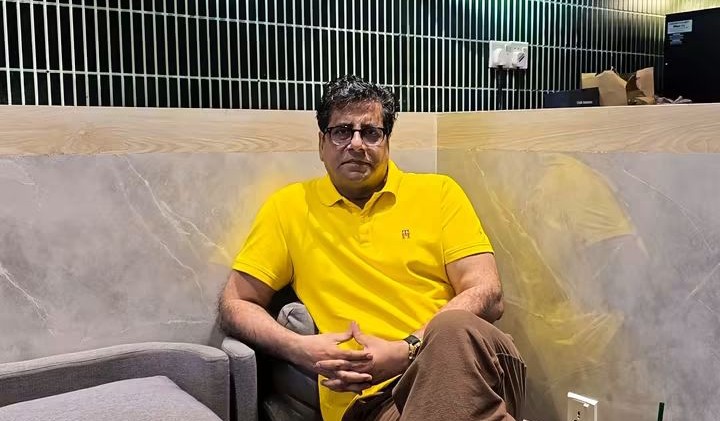
Veteran Bangladeshi journalist and war correspondent Anis Alamgir has published a lengthy Facebook status responding to a video by Saifur Sagor (also known as Shaifur Rahman Sagar), creator and host of the controversial YouTube channel Face the People.
Alamgir describes Sagor’s content as propaganda aimed at him for his outspoken commentary, drawing parallels to the style of certain expatriate online figures and domestic outlets critical of him.
In the post, Alamgir recounts a 2021 incident. Following the July 16 killing of Pulitzer Prize-winning Reuters photographer Danish Siddiqui by the Taliban in Afghanistan’s Spin Boldak area, Sagor invited Alamgir (then unknown to him) to an online talk show alongside Ambassador Humayun Kabir. Alamgir agreed partly because of his long association with Kabir.
Once the programme began, he says, two unfamiliar participants steered the discussion beyond Afghanistan into Islamic Sharia. When Alamgir indicated he wanted to leave, Sagor urged him to stay for the Afghanistan segment.
The conversation turned to the rise of militancy in Bangladesh. Alamgir attributed it to the gradual influence of Afghan-returnee mujahideen such as Abdur Rahman and Mufti Hannan.
Sagor responded by saying that Alamgir himself was an “Afghan returnee.”
Alamgir, who had been briefly detained by the Taliban in Kandahar in 2001 while covering the war as a journalist (not as a fighter), says he immediately recognised the implication as equating professional war reporting with armed jihad.
He completed the Afghanistan portion, declined further religious discussion, and later blocked Sagor across messaging platforms.
Alamgir writes that the current dispute began after he referred to Sagor in a recent post using a strong derogatory term (“bandidir pola”). In response, Sagor released a video using highly abusive language directed at Alamgir and members of his family.
Alamgir questions the substance of Sagor’s claim that he is “not a journalist” and has made “no contribution” to the profession, asking why Sagor’s channel has produced roughly 14 pieces of content about him within a single month if that were true.
He further alleges that Sagor was previously caught attempting extortion by an organisation called Mastul (a video of which he says is available online) and accuses him of running a Jamaat-e-Islami-aligned agenda through anti-government propaganda intended to destabilise the country.
Alamgir also notes that part of the recent friction relates to a column he wrote in 2021 examining whether the late President Ziaur Rahman’s “Bir Uttam” freedom-fighter gallantry title should be revoked. The piece appeared online in Bangla Tribune and in print in the Dhaka Tribune.
The exchange comes against the backdrop of heightened political tension in Bangladesh. Alamgir, known for battlefield reporting from Afghanistan (2001) and Iraq (2003) and later as a television commentator and columnist, was arrested in December 2025 under the Anti-Terrorism Act on allegations of spreading propaganda and conspiracy; he was later granted bail and released in March 2026. Separate corruption allegations by the Anti-Corruption Commission also proceeded.
In recent weeks, attacks and arson on dozens of Grameen Bank branches have occurred, and Alamgir has faced renewed calls for his arrest over earlier comments predicting possible backlash against Grameen-linked properties after the exit of the Yunus interim government—claims he has rejected as mischaracterisations of a political forecast.
Alamgir’s post frames the latest criticism from Sagor (and similar content from expatriate online voices such as Elias Hossain and Pinaki Bhattacharya, as well as outlets like The Dissent) as coordinated propaganda against his willingness to speak critically on politics, security, and recent events.
Sagor’s channel has grown into a major digital platform for political discussion, especially after his return from years in Canada following the 2024 political changes. No immediate public response from Sagor to this specific Facebook status was available at the time of writing.
The episode highlights ongoing polarisation in Bangladeshi media and social platforms, where personal insults, historical grievances, and accusations of political agendas frequently collide with debates over journalism, freedom of expression, and accountability.