
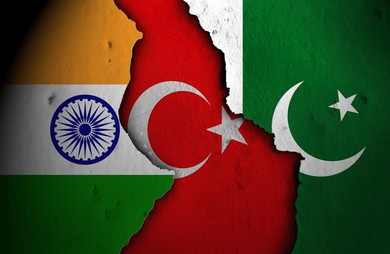
On 16 November 2026 the UN General Assembly adopted resolution A/81/L.13 on cooperation between the United Nations and the Organisation of Islamic Cooperation by 112 votes in favour, 6 against and 39 abstentions. India was one of the six “no” votes (alongside the United States, Israel, Armenia, Cyprus and Greece). Turkey facilitated the negotiations; Iraq introduced the text on behalf of the OIC group.
India’s Deputy Permanent Representative Yojna Patel explained the negative vote on two grounds: (1) the OIC Permanent Observer Mission, under Turkish facilitation, deliberately excluded India and several other member states from successive draft circulations, which she called “blatant and intentional” and “done by design”; and (2) the resolution’s references to documents from the July 2026 OIC Ministerial Conference on Women in Islamabad that contained language on Jammu and Kashmir.
India rejected those references as factually incorrect and outside the OIC’s competence, describing them as the product of systematic misuse of the organisation by one member state.
Pakistan’s and Turkey’s positions and the absence of sharp public pushback
As of 19 November, neither Pakistan’s Foreign Office nor Turkey’s Ministry of Foreign Affairs had issued a dedicated public statement specifically rebutting Patel’s explanation of vote. Pakistani coverage and official channels have instead continued their long-standing line.
Just days earlier (around 15 November), Deputy Prime Minister Ishaq Dar and the OIC Secretary-General reaffirmed support for the right of self-determination for the people of Jammu and Kashmir alongside Palestine. Pakistani media and diplomatic interventions routinely characterise the territory as disputed and under occupation, treat OIC platforms as legitimate venues for the issue, and frame Indian objections as isolation or refusal to accept international scrutiny.
Earlier Pakistani reporting on the 112-6 vote presented India’s position as a minority view rather than engaging the procedural exclusion claim in detail.
Turkey’s role is structural rather than reactive in this episode. Ankara facilitated the draft, has long been active in the OIC Contact Group on Kashmir (alongside Pakistan, Azerbaijan and others), and maintains close strategic ties with Islamabad. Turkey has not publicly addressed India’s specific accusations of exclusion or the demand for an investigation into working methods.
The silence is consistent with Turkey’s broader approach: support OIC consensus positions on Kashmir while avoiding bilateral escalation with New Delhi on procedural points that did not prevent the resolution’s adoption.
What the episode reveals
The outcome underscores a durable asymmetry. The resolution passed by a large majority, updating prior UN-OIC cooperation language and including references that India objects to.
For Pakistan, the vote keeps Kashmir on the OIC’s institutional agenda and demonstrates that OIC-linked language can still command broad UN support even when a handful of states object. For Turkey, facilitation of a text that advanced without Indian buy-in reinforces its alignment with OIC majorities on the issue.
For India, the dual critique (process + substance) is part of a consistent post-2019 strategy: treat Jammu and Kashmir as an internal matter after the revocation of Article 370, reject any OIC locus standi, and highlight procedural irregularities when they occur.
Other “no” votes had different motivations—Cyprus and Greece objected to language touching on the Cyprus issue that they view as inconsistent with Security Council resolutions; the United States cited vague or unacceptable formulations—so the opposition was not a unified bloc.
The lack of high-profile Turkish or Pakistani counter-statements in the immediate aftermath suggests both capitals viewed the resolution’s adoption as the main deliverable and saw limited value in a public exchange over consultation procedures that did not alter the final tally.
The episode fits a recurring cycle: Pakistan and allies use OIC platforms to generate Kashmir-related language; India rejects it as outside the organisation’s mandate and, when process complaints arise, publicises them; the texts still pass with comfortable majorities.
Diplomatic costs remain low for the sponsors, while India continues to register its objections without preventing the outcomes.