


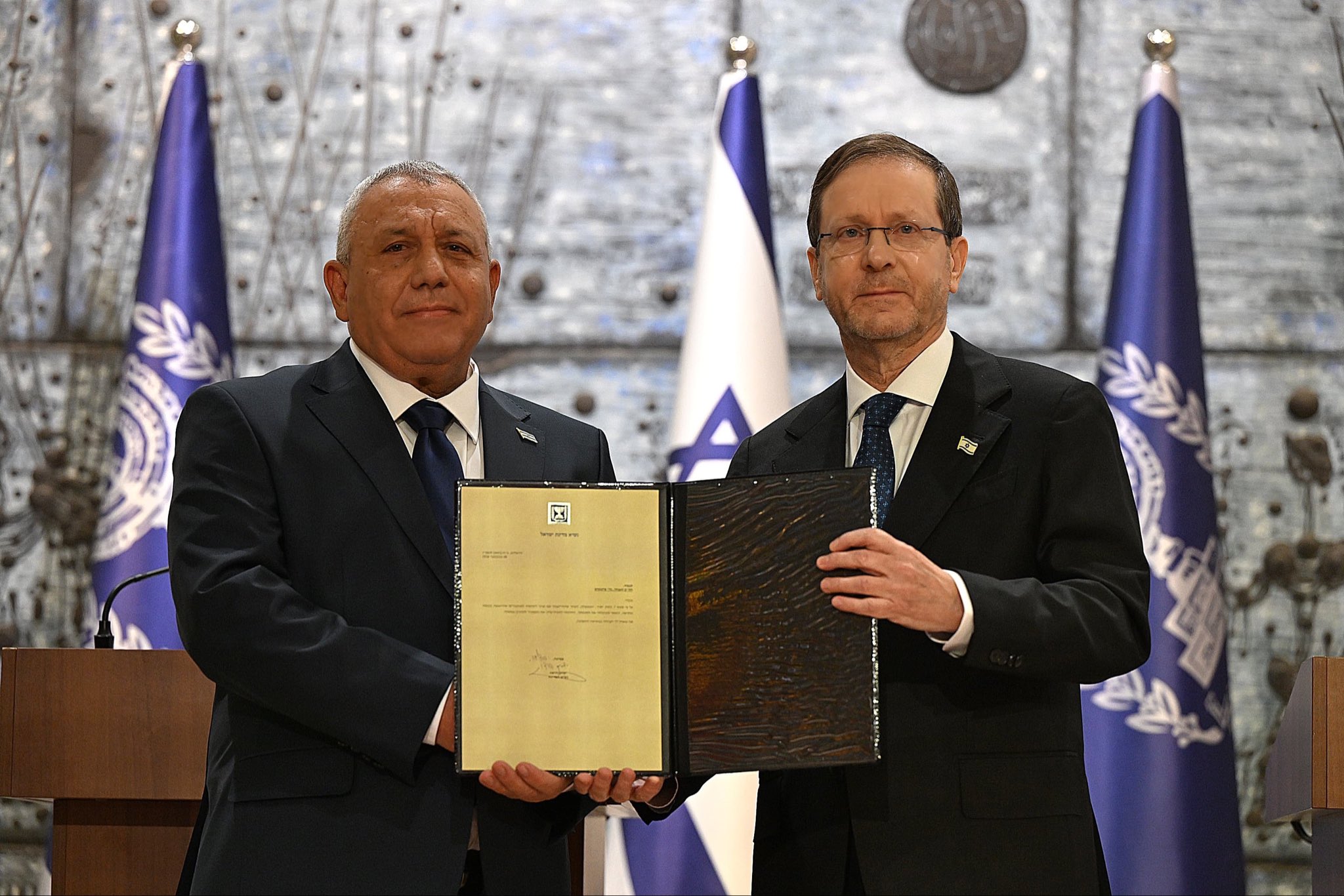
Israeli President Isaac Herzog formally tasked opposition leader Gadi Eisenkot with forming the next government on Sunday, November 8.
Herzog’s decision followed the October 27 election, which produced no clear majority in the 120-seat Knesset. Benjamin Netanyahu’s right-wing and religious bloc secured 53 seats, Eisenkot’s opposition alliance won 48, and Arab-led parties took a record 19.
During consultations, parties representing 67 lawmakers recommended Eisenkot (leader of the Yashar party and a former IDF chief of staff), while 46 backed Netanyahu.
Eisenkot now has 28 days, with a possible 14-day extension, to assemble a coalition of at least 61 seats. He has ruled out a full partnership with Arab parties and faces difficult choices: securing support from ultra-Orthodox parties (which demand continued military exemptions), building a minority government with outside backing, or negotiating a unity arrangement with Netanyahu.
Success would end Netanyahu’s long tenure as prime minister; failure could return the mandate to him or trigger new elections. Netanyahu remains caretaker until a new government is sworn in.
This marks a clear setback for Netanyahu after his coalition lost its previous majority, though forming a stable government remains uncertain amid deep political divisions.
Later on Sunday, Eisenkot made a statement on X. He wrote: “Israel needs a new government. Israel needs leadership that champions what unites us and paves the way for a new era—an era of Zionism, solidarity, and friendship.
“The task is difficult and there is much work ahead, but I believe success is within reach. Israel must win. And I will do everything to make that happen. With God’s help, we will act and succeed! 🇮🇱”