

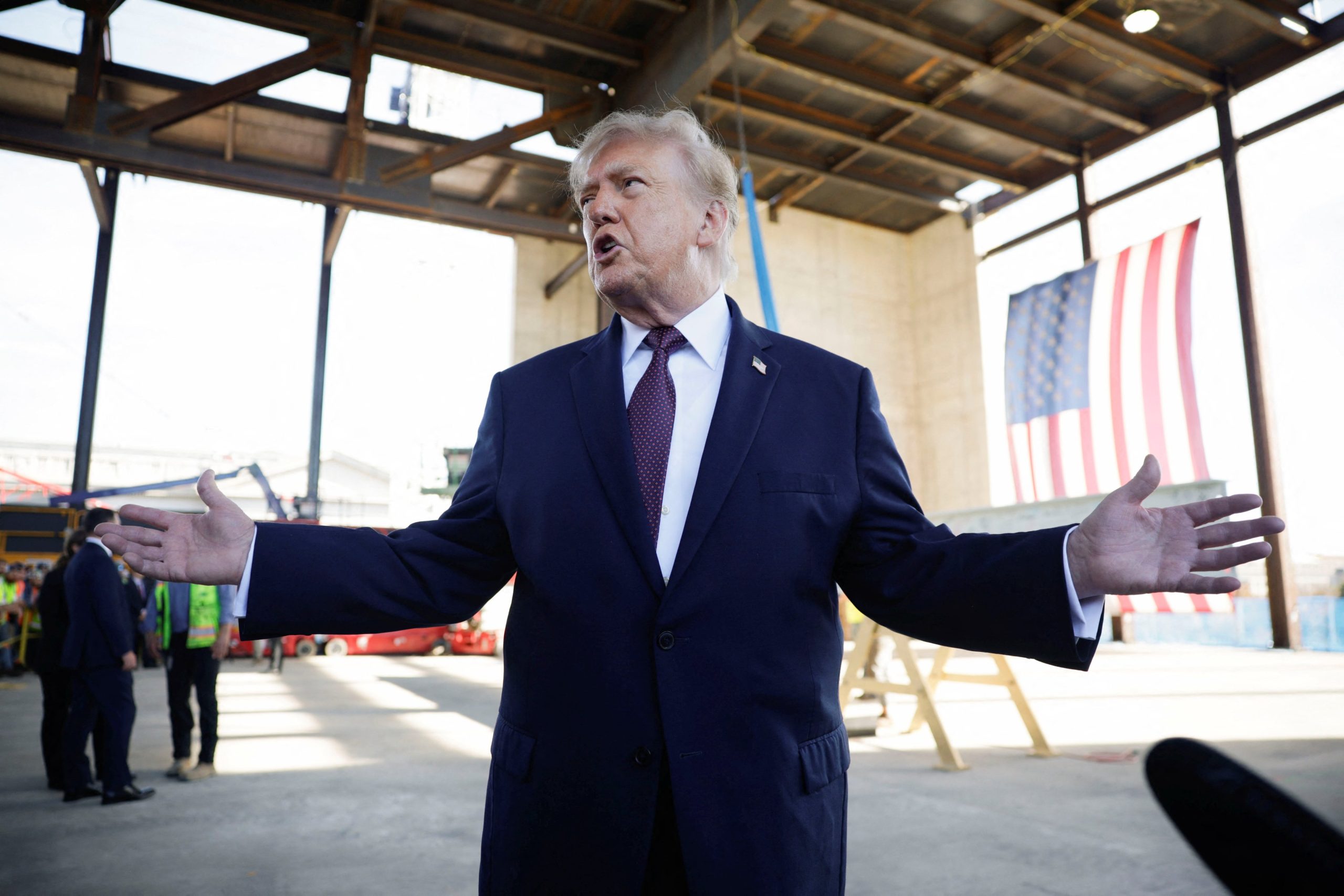
President Donald Trump said Sunday that it is “highly unlikely” he will order the United States back into full-scale war with Iran, provided negotiations show progress on a strong agreement covering Tehran’s nuclear program and the reopening of the Strait of Hormuz.
He repeated the phrase five times in a roughly 20-minute phone interview with CNN’s Jim Sciutto.
“It depends on whether or not they sign a very strong agreement,” Trump said. “The answer is highly unlikely it’s going to be necessary. They’re a failing nation. It just came out, you saw this year, 301% inflation. Highly unlikely it will be necessary. I would if necessary, but we hit them really hard. … They’re withering away financially. We’ve hit them militarily. We could finish them off.” He added that Iran retains only about 10% of its missile capacity and 15% of its drone capabilities after earlier U.S. strikes destroyed much of its air defenses and production facilities.
The comments come roughly eight months into a conflict that began earlier in 2026. Both sides have been in a relative stalemate for months, with limited major combat but continued Iranian attacks on oil tankers in the Strait of Hormuz and a US naval blockade that has severely restricted Iranian oil exports and frozen assets abroad.
Recent US “defensive” strikes hit targets on Qeshm Island in the Strait after reported Iranian activity against US assets. Trump has repeatedly described the situation as not a traditional “war” because of the low levels of sustained fighting and claimed U.S. control over shipping through the waterway, with more oil flowing than before the conflict intensified.
U.S. forces remain positioned for rapid escalation if ordered. Trump noted three aircraft carriers are in the region—“fully locked and loaded”—and that the US has identified infrastructure targets, including power plants and 38 bridges that could be struck quickly. He said he prefers to avoid such destruction, estimating it would take Iran a decade or more to rebuild. Earlier reporting indicated US Central Command has plans for major operations that could begin within 96 hours of an order.
The interview follows last week’s midterm elections, in which Democrats gained control of Congress amid voter dissatisfaction with the war’s costs and duration. In prior days, Trump had told the Financial Times he had “no immediate plans” to strike and that the US was “getting everything we want,” while still describing forces as “locked and loaded.” He had previously pledged not to attack before the midterms.
Diplomatic efforts continue through Qatar, which is mediating indirect talks. Iranian officials have been reviewing proposals that could include temporary steps such as reopening the Strait of Hormuz and allowing IAEA access to previously struck sites, in exchange for US concessions including easing the naval blockade, sanctions relief, and unfreezing assets. Tehran has long insisted on a set of core demands—ending the blockade, lifting sanctions, releasing frozen funds, compensation, and broader security guarantees—before engaging on nuclear limits.
Reports from the Times of Israel, Al-Monitor, and AP indicate some movement on nuclear-related proposals via mediators, though Iranian hardliners have cited the U.S election results as leverage for better terms. Qatar’s Emir and US officials have held recent calls emphasizing de-escalation.
Trump’s latest remarks align with earlier statements downplaying the need for further major strikes while maintaining military pressure and economic leverage. Whether the “highly unlikely” assessment holds will depend on tangible progress in the Qatar-mediated channel over the coming weeks, as both sides weigh the costs of renewed escalation against the potential for a negotiated settlement.