


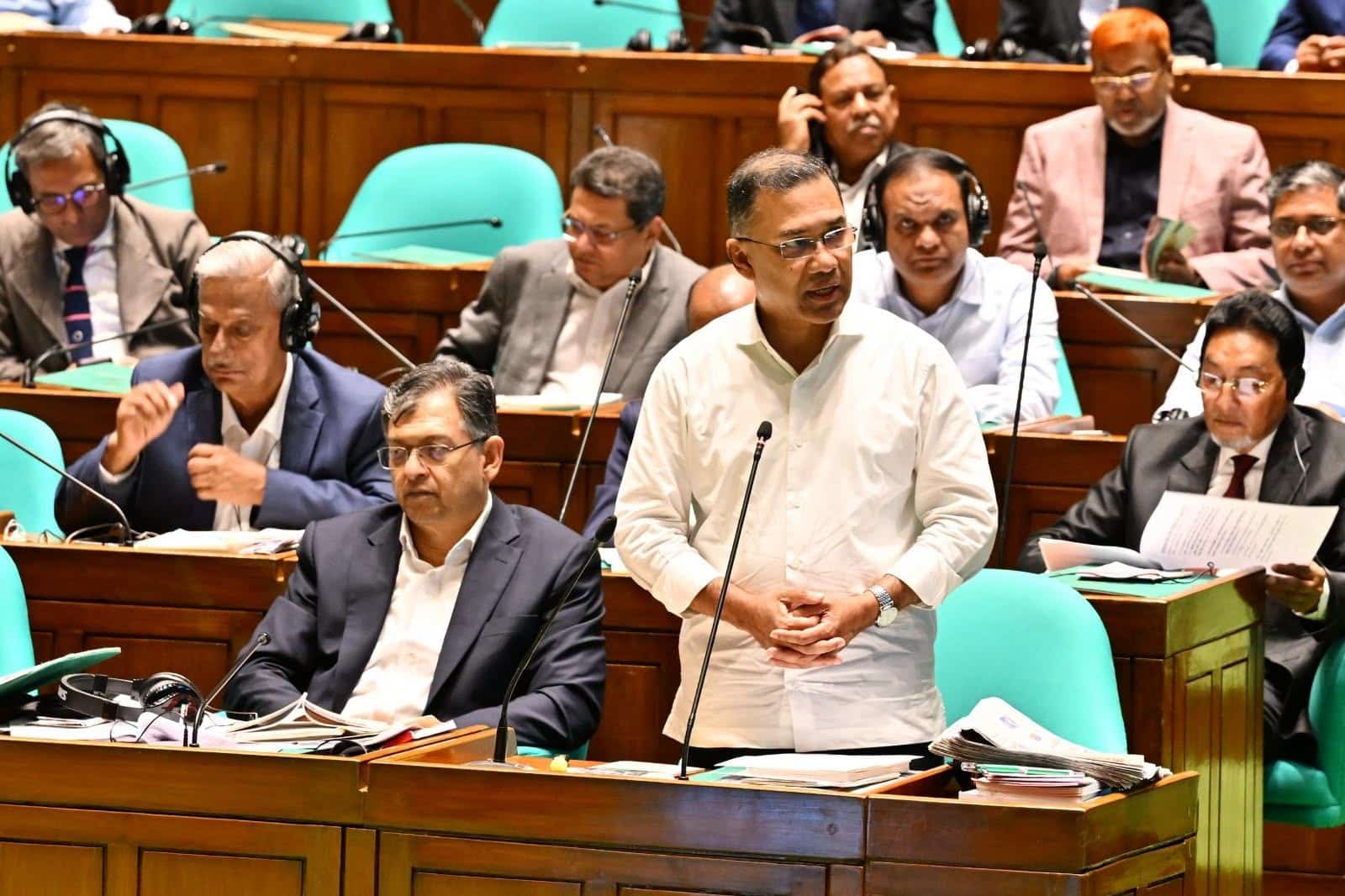
Prime Minister and BNP Chairman Tarique Rahman has instructed ruling-party lawmakers to remain active on the streets and resist any efforts to create unrest or disorder in the country, amid continuing concerns over law-and-order threats and domestic and foreign conspiracies.
He issued the directions on Monday (9 November) at a meeting of the BNP parliamentary party at the Jatiya Sangsad Bhaban, ahead of the opening of the fourth session of the 13th National Parliament. Rahman chaired the meeting in his capacity as Leader of the House and prime minister.
Sources present said he warned that threats to law and order, along with various domestic and international conspiracies, remain ongoing. Lawmakers must stay alert and active on the streets to handle any situation that arises. Quoting him, sources reported: “The message is loud and clear: we are on the streets, and we must remain on the streets. We have to confront all conspiracies on the streets.”
This stance aligns with Rahman’s recent public posture. Just two days earlier, on 7 November (National Revolution and Solidarity Day), he led a large “Sovereignty Rally” on foot for roughly 6–7 kilometres from the BNP central office in Naya Paltan to Manik Mia Avenue—his first major street procession in 21 years. In speeches that day he warned of renewed conspiracies against democracy and sovereignty and urged people to confront them, echoing themes of protecting gains from the 2024 mass uprising.
Discussion on Sheikh Hasina’s possible return
The possible return of ousted former prime minister Sheikh Hasina came up early in the meeting. Home Minister and BNP Standing Committee member Salahuddin Ahmed said that if Hasina seeks to return, the government will take necessary steps under the existing Bangladesh–India extradition treaty, following prevailing laws, rules and established practices.
Rahman himself made no direct statement on the matter, according to sources. The discussion occurred against the backdrop of a recent Reuters interview in which Hasina expressed her wish to return to Bangladesh and surrender to a court, plus reports (still under verification) that an application had been made on her behalf for a new passport and national identity card at the Bangladesh High Commission in New Delhi.
Hasina has been in India since fleeing during the August 2024 student-public uprising that ended her long rule. She was later sentenced to death in absentia by Bangladesh’s International Crimes Tribunal for crimes against humanity. Dhaka has repeatedly sought her extradition under the 2013 bilateral treaty (amended in 2016); India has said the request is under examination through established legal processes. Bangladesh’s Law Minister has recently described her as a “convicted criminal” and confirmed that the extradition request remains active.
Other agenda items
Rahman also directed MPs to stay alert to the changed political situation, work to maintain normalcy nationwide, and prioritise the security of people’s lives and property. The meeting reviewed the political and law-and-order situation (briefed by the Home Minister), ongoing road development, energy and electricity supply, and the market situation for essentials ahead of Ramadan. Rahman sought detailed updates from relevant ministers on their ministries’ activities.
Lawmakers further discussed a proposed system for allocating development funds in parliamentary constituencies through local government. Under the arrangement, MPs could spend up to Tk 15 lakh per union on works including improvements to schools, colleges and roads.
The meeting reflects the BNP government’s emphasis on street-level political mobilisation and readiness amid lingering sensitivities over the post-2024 transition, including the status of Hasina and bilateral ties with India.