


The Bangladesh government sees no legal complication in extraditing ousted Prime Minister Sheikh Hasina from India, arguing that she has expressed a desire to return herself, according to a senior adviser.
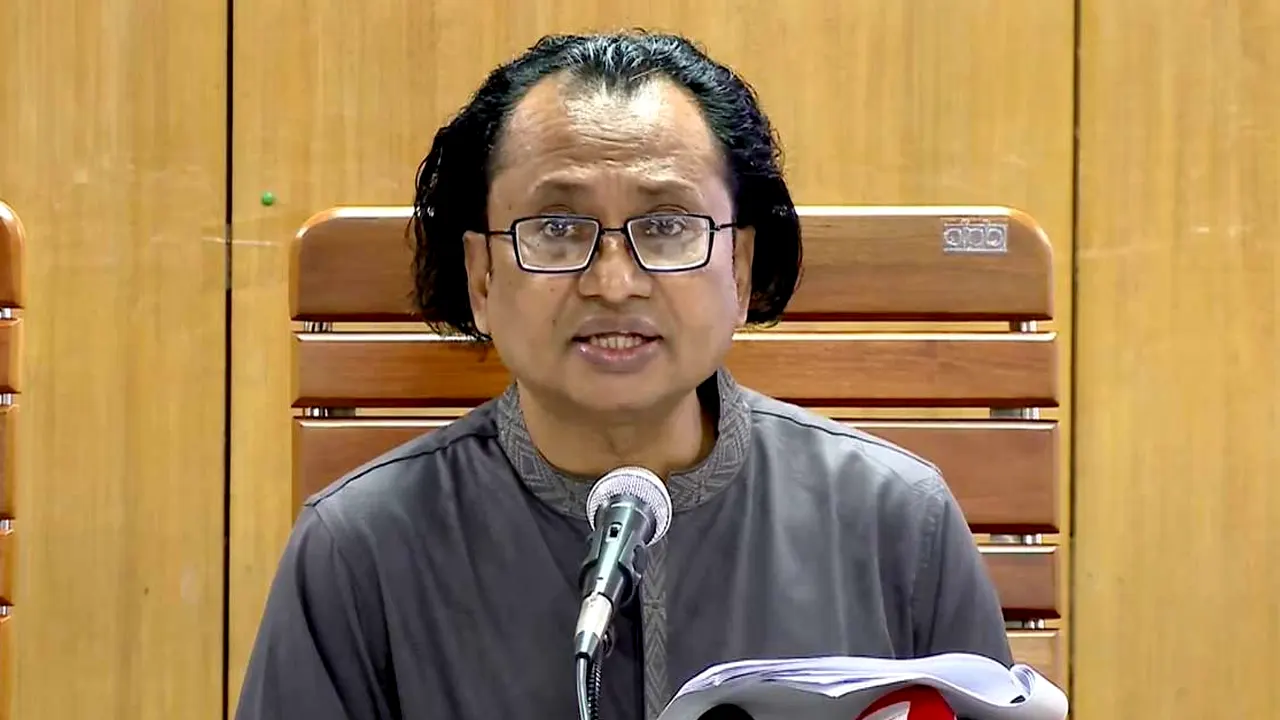
Prime Minister’s Information and Broadcasting Adviser Dr. Zahed Ur Rahman made the remarks on Tuesday at a regular press briefing at the Secretariat on the government’s activities. “We want to extradite her. We want to bring her,” he said.
“Now she herself wants to come. That means she does not need to go to court. She will say, ‘extradite me.’ So, regarding the legal process and legal complexities that have been talked about in extradition, at least I do not see that.”
He added that India should have no difficulty facilitating the process at this stage because the person sought for extradition wants to return. Bangladesh has long sought Hasina’s return as a convicted accused under the bilateral extradition treaty.
The comments come a day after Reuters reported that Hasina, living in India since August 2024 as a state guest, had applied through London-based lawyers at Matrix Chambers for a new Bangladeshi passport and National Identity Card (NID) at the Bangladesh High Commission in New Delhi.
The letter cited the reported revocation of her previous documents by the interim government and asked for the applications to be processed expeditiously on the basis of her nationality and international human rights obligations.
The High Commission confirmed receiving the email and forwarded it to the Foreign Ministry in Dhaka, though some officials noted the absence of clear authorisation proof from Hasina herself.
Recent developments
Hasina fled to India by helicopter on August 5, 2024, amid a student-led mass uprising (known as the July Uprising) that ended her 15-year rule. She was later sentenced to death in absentia in November 2025 by Bangladesh’s International Crimes Tribunal for crimes against humanity linked to the crackdown on protesters, in which hundreds were killed (a UN report estimated nearly 1,400 deaths). She has denied the charges, rejected the tribunal’s legitimacy, and faces hundreds of other cases, including hundreds on murder charges. Her Awami League party has been banned.
Bangladesh has repeatedly requested her extradition under the 2013 India-Bangladesh Extradition Treaty. State Minister for Foreign Affairs Humaiun Kobir has dismissed the passport and NID request as “absurd,” “drama,” and “laughable,” stating that Bangladesh does not issue passports to “terrorists” or fugitives. He has insisted her only proper route home is formal handover under the treaty so she can surrender and face her sentence. Home Minister Salahuddin Ahmed has said authorities are verifying the application’s authenticity and legal basis, while reiterating that an extradition request has already been sent to India.
Hasina has publicly vowed to return in December 2026, saying she intends to surrender before a court or face consequences on her own soil. India has acknowledged receiving Bangladesh’s extradition requests and said they are under examination through established legal processes, but has given no timeline or decision. The treaty contains a political offence exception that could allow refusal in certain circumstances, and Indian officials have previously noted that no automatic obligation exists.
Zahed Ur Rahman has previously said the government wants Hasina back—whether voluntarily or through formal processes—and that she would face due legal process rather than any irregular treatment upon return. The latest statement frames her expressed willingness to return as simplifying the extradition path for the current BNP-led government under Prime Minister Tarique Rahman.